
Proper Handgun Handling: Keeping Safe and Accurate
Successfully navigating the intricacies of handgun handling requires understanding the fundamentals of grip, stances, and breathing techniques. This article will guide you through essential aspects of holding and firing a handgun for both safety and accuracy. From mastering a two-handed grip to understanding the role of proper breathing, readers will benefit from detailed insights. Whether you’re a novice or a seasoned shooter looking to refine your skills, this guide will ensure you practice firearm safety and improve your shooting precision.
Important
The distance you hold a handgun from your body significantly affects both safety and shooting precision. Maintaining an appropriate distance not only ensures that you are in control of the firearm but also helps manage recoil effectively. Typically, a handgun is held at arm’s length, but slight adjustments may be necessary based on individual comfort and control.
A consistent distance ensures that your body remains in a stable position, allowing for better accuracy. Moreover, maintaining a safe distance minimizes the risk of injury from ejected shell casings or slide movement. The right combination of distance and positioning sets the foundation for effective handling and accurate shooting.
Use Two-handed Grip
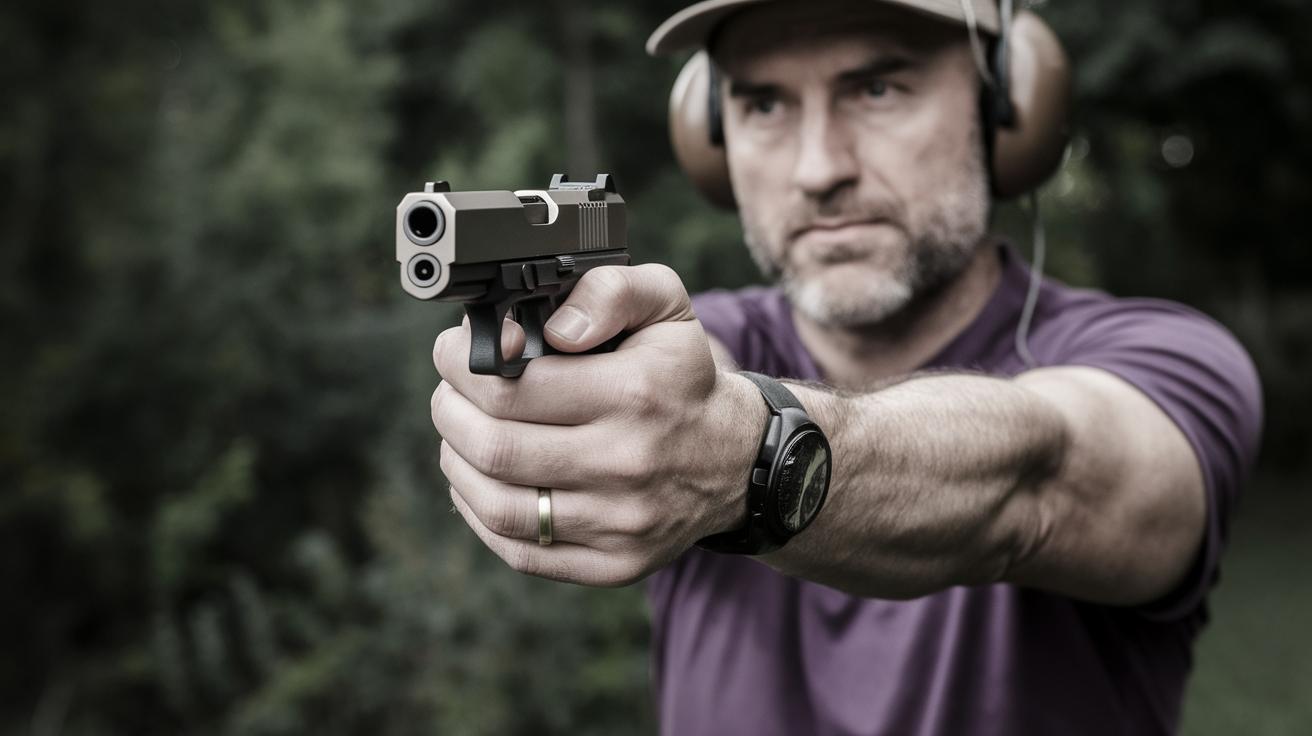
The two-handed grip is the gold standard for stability and control when handling a handgun. It involves using both hands to support and manage the firearm, distributing the weight evenly, and providing better recoil management. This grip enhances accuracy and reduces muscle fatigue, making it ideal for extended shooting sessions.
Effective execution of a two-handed grip requires placing the dominant hand high on the backstrap with the trigger finger placed outside the trigger guard until ready to shoot. The non-dominant hand wraps around the dominant hand, with thumbs aligned and pointing forward. This technique not only stabilizes the firearm but also maximizes control over the shot.
Find the Right Grip Strength
Grip strength plays a crucial role in ensuring control and precision when firing a handgun. Excessive grip tension can lead to fatigue and decreased accuracy, while too little can result in a lack of control over the weapon. A balanced approach to grip strength is necessary for effective handgun handling.
Ideally, your grip should be firm yet flexible, allowing the fingers to maintain a relaxed but secure hold on the firearm. Practicing different grip pressures can help find the optimal balance that provides control without compromising comfort. Consistency in grip strength contributes to improved accuracy and shooting performance over time.
Place One Hand Under the Other
The support hand plays a vital role in stabilizing the handgun and controlling recoil. By placing one hand under the other, you create a solid platform for managing the dynamics of shooting, especially under recoil. This technique aids in maintaining a steady aim and reduces the likelihood of muzzle flip.
The support hand should grip the firearm slightly lower, securing the dominant hand and preventing unnecessary movement. This positioning enhances overall stability and helps ensure accuracy with each shot. Mastery of this technique requires practice but significantly contributes to effective handgun handling.
Use Opposite Forces
Employing opposite forces refers to the balance between pushing forward with the firing hand and pulling back with the support hand. This technique enhances stability by creating tension that counters the handgun’s recoil, minimizing muzzle rise and improving shot placement.
Understanding this dynamic lets shooters maintain control over their weapons, leading to better aim and faster follow-up shots. Practicing this technique regularly can refine your shooting skills, making it a valuable addition to your handgun handling repertoire.
Top of the Barrel Up, Bottom of the Handle Down
How you position the handgun can dramatically affect your accuracy and control. Keeping the top of the barrel slightly elevated while holding the bottom of the handle down can steady your aim and improve accuracy. This alignment promotes proper sight picture acquisition and aids in precision shooting.
Consistency in this technique can enhance muscle memory, enabling shooters to quickly and accurately align their firearms during shooting sessions. Proper alignment also works synergistically with other techniques, reinforcing the effectiveness of your overall shooting style.
Control Your Breathing
Breathing plays a pivotal role in shooting accuracy. Consistent and controlled breathing helps maintain a steady aim, particularly during the act of firing. Holding your breath briefly at the moment of trigger pull stabilizes your body, minimizing motion that could disrupt your shot.
To control breathing effectively, practice timing your breath so that you exhale slowly, pause, and then execute the shot. This method reduces tremors and enhances focus, leading to improved shot accuracy. Integrating breathing control into your shooting routine supports overall precision and control.
Pull the Trigger Slowly
Trigger control is one of the most critical aspects of handgun shooting. Pulling the trigger slowly and steadily ensures that your shot is released in a controlled manner without disturbing your aim. A sudden or harsh trigger pull can cause the firearm to jerk, misaligning the shot.
Practice maintaining even pressure on the trigger, applying force steadily until the shot breaks. This technique, often referred to as “pressing” the trigger, is vital for accuracy and should become second nature with practice. Focusing on smooth trigger control is crucial for achieving consistent and precise shooting results.
Final Thoughts on How to Hold a Handgun
Mastering the art of handgun handling involves understanding a combination of gripping techniques, positioning, and breathing control. These elements collectively contribute to enhancing both safety and accuracy in shooting. Regular practice and mindful application of these strategies build confidence and proficiency over time.
Continuing to refine and adapt these techniques based on personal experience and feedback will allow you to grow as a skilled shooter. The path to mastering handgun handling is ongoing, constantly improving with each session.
1 comment
Jane Doe: An excellent read! The details on breathing techniques were particularly helpful for improving my accuracy!
Leave a comment.
[Comments form placeholder]
| Steps | Details |
|---|---|
| Important | Establish a safe, effective distance for holding the handgun. |
| Use Two-handed Grip | Enhance stability and manage recoil with a secure grip using both hands. |
| Find the Right Grip Strength | Balance grip tension for control and comfort. |
| Place One Hand Under the Other | Stabilize the firearm by positioning your support hand effectively. |
| Use Opposite Forces | Balance forces between hands for improved stability under recoil. |
| Top of the Barrel Up, Bottom of the Handle Down | Align the handgun properly for consistent aim. |
| Control Your Breathing | Maintain a steady aim through controlled breathing techniques. |
| Pull the Trigger Slowly | Smooth, steady trigger manipulation ensures shot accuracy. |