
Mastering Handgun Shooting Techniques
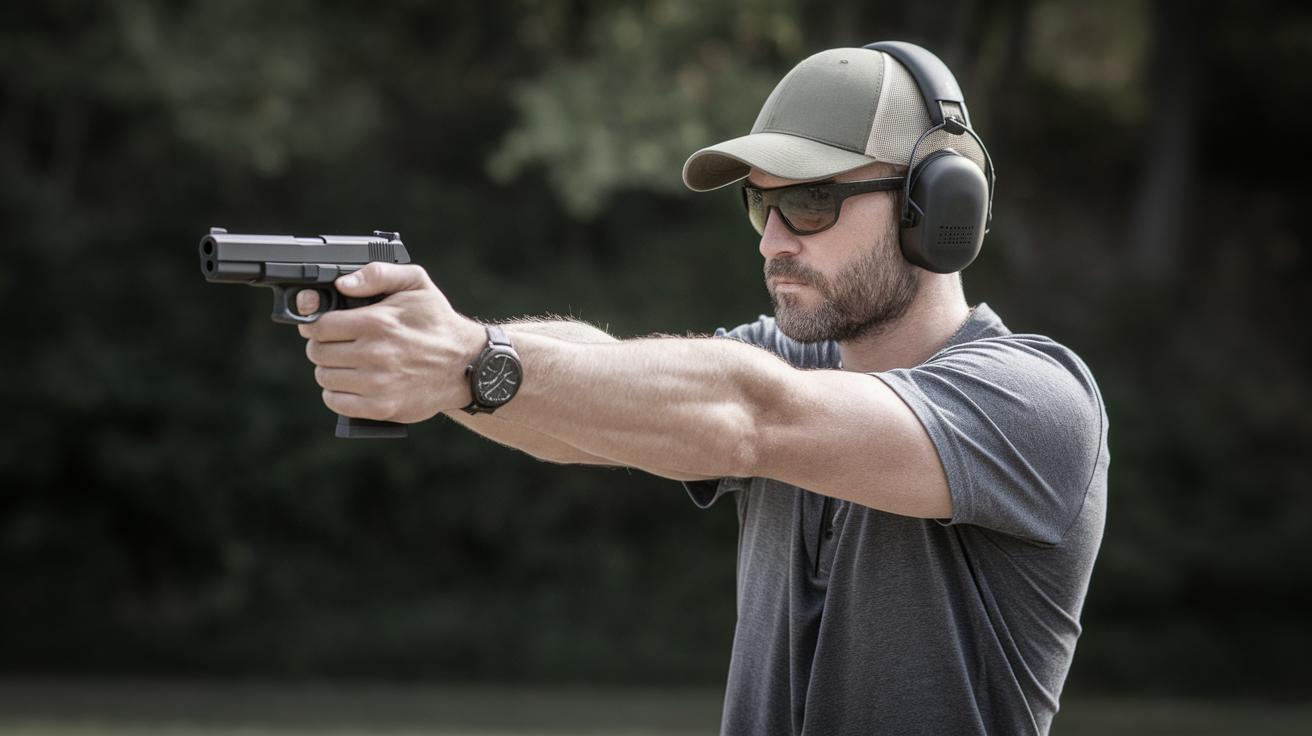
Shooting a handgun with precision and confidence requires mastering several fundamental techniques. This blog post delves into the essentials of effective handgun shooting, suitable for both beginners and those looking to refine their skills. We will explore the importance of establishing a “Power Stance” for stability, achieving a “High Hand Grasp” for better control, and maintaining a “Hard Grip” to minimize recoil impact. Additionally, we’ll discuss how to focus on the “Front Sight” for accurate targeting and the importance of “Smoothly Rolling the Trigger” to ensure a successful shot. Lastly, we will provide some key suggestions to improve your practice sessions. Join us on this journey to enhance your shooting skills, maximizing both safety and accuracy.
The “Power Stance”
One of the foundational elements of effective handgun shooting is establishing a stable stance, commonly referred to as the “Power Stance.” A solid stance ensures balance and control, minimizing the risk of being thrown off balance when firing. To achieve this, start with your feet shoulder-width apart and slightly bend your knees. Distribute your weight evenly, leaning slightly forward at the waist to counteract the recoil. This position not only stabilizes your body but also aligns it properly with your target.
The power stance also requires attention to your feet’s positioning. A slight angle, with one foot slightly ahead of the other, can enhance stability and allow for efficient weight transfer. This setup helps in maintaining control over the handgun, especially during rapid fire sequences. Practicing this stance repeatedly will build muscle memory, enabling a consistent foundation for all shooting activities.
High Hand Grasp
The grip is crucial in controlling the handgun, and the “High Hand Grasp” technique is essential for achieving maximum control and precision. By placing the web of your hand high on the backstrap of the gun, you minimize muzzle flip and ensure the firearm is an extension of your arm. This technique allows for quicker follow-up shots and better overall control.
Ensure your dominant hand wraps around the grip firmly, and your trigger finger is alongside the frame until ready to shoot. The support hand should cradle the dominant hand, wrapping around it while both thumbs point forward, aligning with the barrel. This approach offers additional control and stability, particularly beneficial when managing recoil.
Hard Grip
A “Hard Grip” is paramount for managing recoil and maintaining control over the handgun. It involves gripping the firearm as tightly as reasonably possible while still being able to execute a smooth trigger pull. A firm grip reduces the gun’s movement in your hands during a shot, leading to greater accuracy.
It’s important to note that gripping too hard can lead to fatigue and affect precision. Practice finding a balance where your grip is firm yet comfortable. Over time, your grip strength will improve, allowing for consistent control without excessive exertion. Pay attention to any adjustments needed after each shot, gradually perfecting the ideal grip for your shooting style.
Front Sight
Focusing on the “Front Sight” is a technique that enhances accuracy by ensuring proper alignment with the target. The most reliable way to shoot accurately is to have your front sight perfectly in alignment with the target while maintaining focus. This may sound simple, but it requires practice to develop the habit of focusing on the sight and not the target.
Your rear sights should blur slightly as your eyes concentrate on the front sight. Proper sight alignment becomes automatic with practice, improving shot placement significantly. It’s recommended to practice dry firing and sight acquisition drills to internalize this focus as part of your shooting routine.
Smoothly Roll the Trigger
Trigger control is a vital component in accurate shooting, and “Smoothly Rolling the Trigger” is key to avoiding unnecessary gun movement. Rather than jerking the trigger, apply consistent, steady pressure until the shot is fired. A smooth trigger pull ensures that the alignment and aim you set with your front sight are undisturbed.
Dry firing exercises can be particularly useful in perfecting your trigger control technique. Practice pulling the trigger smoothly without disturbing the sight alignment. This method not only enhances precision but also allows you to become familiar with your firearm’s trigger sensitivity and break point.
Some Suggestions
Regular practice is crucial for mastering handgun shooting techniques. Set realistic targets for improvement and gradually increase the distance and difficulty as your skills progress. Consider engaging in professional training sessions, which can provide valuable feedback and structured learning.
Safety should always be your top priority when handling firearms. Ensure that you are familiar with all safety protocols and that they are diligently followed during practice sessions. Staying informed about the latest techniques and advancements in handgun shooting can also contribute to improved skills and confidence.
Lessons Learned
| Technique | Key Points |
|---|---|
| Power Stance | Ensures stability; feet shoulder-width apart; weight evenly distributed. |
| High Hand Grasp | Web of hand high on backstrap; dominant hand grips firmly. |
| Hard Grip | Firm but comfortable grip; reduces movement; enhances control. |
| Front Sight | Focus on the front sight; alignment with target is crucial. |
| Smoothly Roll the Trigger | Consistent pressure; avoid jerking for improved accuracy. |
| Suggestions | Regular practice; prioritize safety and professional guidance. |
Leave a Reply
We value your insights and experiences in shooting. Feel free to leave a reply below to share your thoughts on handgun shooting techniques, or any tips you might have for fellow enthusiasts. Let’s learn and improve together!