
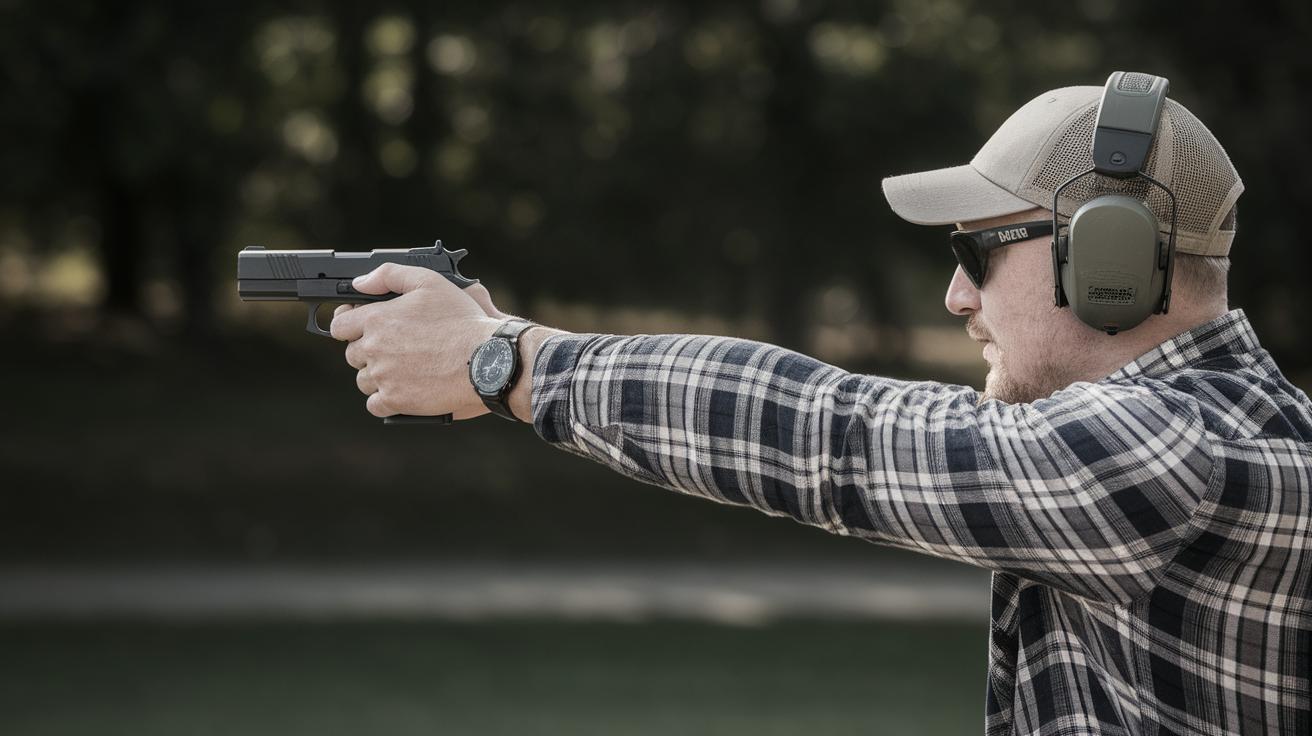
Mastering the Art of Pistol Shooting
Shooting a pistol accurately requires more than just a steady hand; it demands a comprehensive understanding of various technical skills and mental strategies. This blog post delves into the essential elements of shooting a pistol with precision. Key components such as the “Power Stance,” high hand grasp, hard grip, and sight alignment are explored in detail. Additionally, the nuances of trigger control and some practical suggestions for improving shooting technique are discussed. Whether you’re a novice shooter or an experienced marksman looking to refine your skills, this guide offers invaluable insights to aid your journey toward becoming a proficient shooter.
The “Power Stance”
One of the foundational elements of proper pistol shooting is adopting the “Power Stance.” This stance involves positioning your feet shoulder-width apart with your dominant foot slightly back. This positioning provides a stable base and allows for better balance and recoil management. Aligning your body forward, with knees slightly bent, helps absorb the pistol’s recoil, keeping your shots consistent.
Engaging your core muscles is essential while maintaining the power stance. A firm core helps stabilize your upper body, preventing unnecessary movement that could affect your aim. An effective stance also enhances your endurance, allowing you to shoot for extended periods without fatigue. Remember that a relaxed yet firm posture is key to maintaining precision and control over your shots.
High Hand Grasp
The high hand grasp involves positioning your firing hand as high up on the pistol grip as possible. This grasp minimizes muzzle flip and enhances recoil control. Achieving a consistent high hand grasp is crucial, as it directly affects the alignment of the pistol with your arm, improving accuracy with each shot.
A proper high hand grasp also ensures that your non-dominant hand can effectively assist in stabilizing the pistol. By wrapping your supporting hand around your dominant hand, you create a unified grip that maximizes control. Practice this grasp regularly to develop muscle memory, ensuring consistent performance during live-fire situations.
Hard Grip
Holding the pistol with a hard grip is necessary for managing recoil and maintaining accuracy. A firm grip reduces the movement of the firearm during discharge, allowing you to keep your sights aligned with the target. However, it’s important not to overexert, as excessive tension can lead to hand fatigue and negatively impact shooting precision.
Developing a balanced grip involves applying equal pressure from both hands. Ensure that the web between your thumb and index finger is positioned securely on the backstrap of the pistol. Practice dry-firing exercises to develop and strengthen your grip, which will contribute to better control and consistency when shooting live ammunition.
Front Sight
The front sight is one of the most vital components to focus on when aiming a pistol. A clear focus on the front sight ensures that your eye remains aligned with the target, enhancing accuracy. The rear sights should appear slightly blurred, helping you maintain the necessary concentration on the front sight.
Mastering front sight focus requires practice and patience. Dry firing and target practice at varying distances can help train your eyes to naturally seek alignment with the front sight. Over time, this focus will become instinctual, greatly improving your targeting performance under various shooting conditions.
Smoothly Roll the Trigger
Smooth trigger control is an art that demands patience and practice. Instead of jerking or pulling the trigger quickly, aim to smoothly roll the trigger back using steady pressure. This minimizes the disturbance to your sight alignment and reduces the chance of flinching—both of which can adversely affect your shot accuracy.
Learning to feel the trigger’s “break” is crucial. The break is the point where the trigger releases the firing pin, and being able to predict this point allows for better timing and increased accuracy. Practice slow trigger pulls during dry-fire sessions to build muscle memory. This will enhance your ability to execute smooth and controlled trigger actions during actual shooting scenarios.
Some Suggestions
Consistency is key in pistol shooting. Regular practice will not only improve your skills but also help you identify and correct any persistent issues. Consider joining a shooting club or taking lessons from certified instructors to gain additional insights and personalized feedback on your technique.
Exploring different shooting drills can also broaden your proficiency. Incorporate drills that focus on speed and accuracy, such as the “El Presidente” or Mozambique drill, which challenge various aspects of your skill set. Maintain a shooting log to track your progress and highlight areas that require further attention, ensuring comprehensive improvement.
Leave a Reply
If you have any questions, comments, or personal experiences you’d like to share, please feel free to leave a reply. Engaging with other enthusiasts and experts can significantly enhance your learning journey and provide valuable feedback on your shooting technique. We look forward to hearing from you!
Future Prospects
| Component | Description |
|---|---|
| The “Power Stance” | A stable base position for balance and recoil management, aligning the body forward with knees slightly bent. |
| High Hand Grasp | Positioning the firing hand high on the grip to minimize muzzle flip and enhance control. |
| Hard Grip | Applying a firm, balanced grip to manage recoil and maintain accuracy without hand fatigue. |
| Front Sight | Focusing primarily on the front sight for better accuracy and alignment with the target. |
| Smoothly Roll the Trigger | Employing steady pressure for controlled trigger action, minimizing sight disturbance. |
| Some Suggestions | Engaging in regular practice, joining clubs, and exploring different shooting drills for comprehensive improvement. |