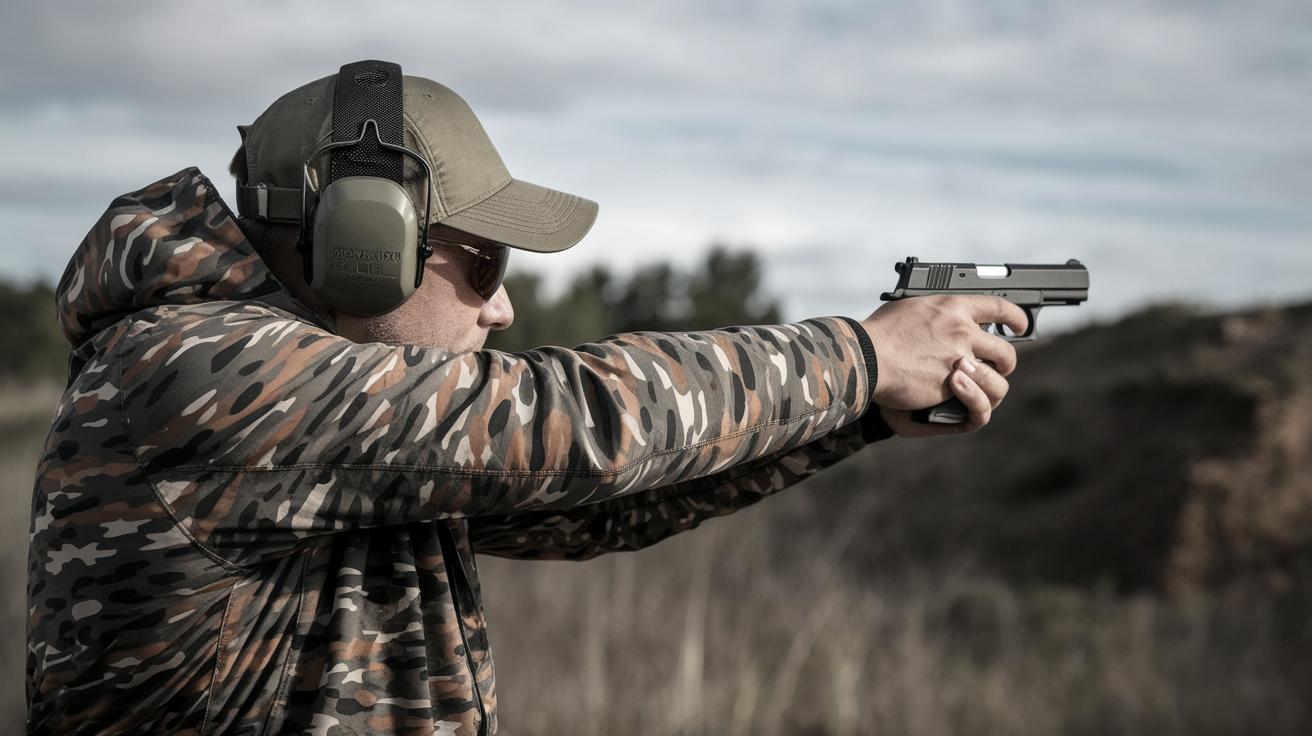
Mastering Gun Shooting: Tips for Precision and Control
Shooting is a skill that requires balance, focus, and precise control. Whether you’re a novice to firearms or a seasoned shooter, continually refining your method is crucial. This post introduces essential gun shooting tips designed to enhance your accuracy and confidence. We’ll cover various techniques, from adopting the power stance and perfecting your grip to honing your trigger control and sight alignment. Additionally, we’ll offer practical suggestions for practice and improvement. By understanding and applying these principles, you’ll build a solid foundation, leading to improved performance on the range. Engage with these insights, and elevate your shooting capabilities to a new level.
The “Power Stance”
A solid stance is fundamental for shooting accuracy. The “Power Stance” offers stability and control, helping absorb recoil and maintain balance. Stand with your feet shoulder-width apart, leading with the non-dominant foot slightly forward. This position provides a stable base and a centered mass, keeping your balance intact with every shot.
Bend your knees slightly to allow flexibility and absorb shock. Your weight should be balanced but leaning slightly forward into the shooter’s position. This forward posture counters the gun’s backward force, enabling quicker target reacquisition. Practicing this stance will cultivate muscle memory, ensuring your default position is reliable and resilient.
Remember, the power stance varies slightly with each individual. Factors like height, weight, and personal comfort can affect your perfect stance. Regular practice sessions help in fine-tuning the stance that feels natural yet effective, contributing significantly to your shooting proficiency.
High Hand Grasp
The high hand grasp plays a pivotal role in managing recoil and enhancing accuracy. Position your hand as high as possible on the gun’s backstrap, ensuring a direct line of force with the bore. This grip minimizes muzzle rise, allowing faster follow-up shots. A high and tight grip stabilizes the gun and augments control, especially with rapid firing.
Your fingers should wrap securely around the handle, yet not excessively tight to restrict dexterity. The thumb of your shooting hand can rest alongside, aiding in alignment. Consistency in your grip technique is crucial, enabling automatic response under pressure and contributing to more uniform shot placement.
Integrate your support hand for added control. Envelop the grip with the heel of the secondary palm, while fingers latch onto the available space on the opposite side from your primary hand. This two-hand configuration equips you with amplified steadiness and balance, especially under the stress of competitive scenarios or swift sequential shots.
Hard Grip
While the high hand grasp provides positioning, the strength of your grip significantly affects your performance. A firm grip ensures fewer adjustments during recoil, directly improving accuracy. However, balance is critical; an overly tight grip can cause hand fatigue, shaking, or aggravated inaccuracy.
The ideal grip requires firmness that secures the weapon but permits unhindered trigger operation. Evaluate your grip by testing its stability under dry fire exercises. Adjust your exertion to enable steady yet controlled discharges, ensuring each shot doesn’t negatively affect subsequent ones.
Hard grip doesn’t merely refer to physical clench but maintaining mental resolve and presence. Cultivating a disciplined grip technique—complemented by mental readiness—will significantly enhance your performance. Deliberate practice sessions focusing on grip mechanics develop consistency and improve both strength and endurance over time.
Front Sight
Achieving shooting accuracy is heavily dependent on proper sight alignment, and the front sight is your focal point. Align the front sight accurately in the rear sight notch, equidistant from both sides, and level across the top. Concentrate on maintaining this alignment as you bring the sights to bear on the target.
Clear and consistent focus on the front sight aids in sharpening your targeting precision. In contrast with the blurred background and rear sights, a sharp front sight allows the shooter to aim with certainty. This ensures consistency of shots, even under varying conditions or pressures.
Develop a habit of regularly checking and adjusting your sight alignment, especially during practice drills. Commitment to focus on the front sight develops instincts for precision, while also rendering quick corrections intuitive, optimizing overall performance with firearms.
Smoothly Roll the Trigger
Mastering trigger control is crucial for precision. Rather than jerking or yanking the trigger, aim for a smooth, steady press. Place your finger’s pad at the center of the trigger, achieving a natural line. Squeeze gently, building pressure until the shot breaks, while keeping your sights aligned throughout the process.
Breaking the shot should come as a surprise. This practice minimizes anticipation and disturbance of the gun’s position—common causes of inaccuracy. Dry fire exercises are invaluable for refining trigger control. These mock practices allow for concentration on the trigger’s smooth and controlled operation without the noise or recoil distraction.
Incorporate feedback from live fire sessions to make necessary adjustments in finger placement or pressure application. Persistent refinement of trigger discipline is foundational for achieving higher accuracy and should be an ongoing element within your shooting regimen.
Some Suggestions
Continuous learning and adaptation are keys to improvement. Regular practice sessions should include a variety of drills addressing different aspects of shooting, such as balance, sight alignment, and transitioning between targets. Incorporating these variations will cultivate adaptability and comprehensive skill development.
Consider professional instruction or mentorship. Even seasoned shooters benefit from external perspectives that can offer critiqued analyses and advanced techniques. Engaging in competitive shooting or training sessions exposes you to diverse scenarios, fostering quick adaptation and problem-solving capacities under pressure.
Safety must remain the foremost priority in all forms of practice. Adhering to general safety protocols and range rules protects yourself and fellow shooters. Committing to a routine of practicing safety and technique will elevate both your competence and confidence.
Leave a Reply
We hope these tips help you in your journey to becoming a more proficient shooter. We invite you to share your thoughts, experiences, or any additional tips that have worked for you. Feel free to leave comments or questions below, contributing to a vibrant discussion where we can all learn and improve together.
By engaging with fellow enthusiasts and experts, you can gain new insights, troubleshoot challenges, and celebrate successes. Your feedback enriches not only your personal practice but enhances the community’s collective knowledge and passion for the sport.
Your active participation helps in fostering a supportive environment where learning and improvement are constant pursuits. We look forward to your input and continuing this journey with you.
Summary of Main Points
| Tip | Description |
|---|---|
| The “Power Stance” | Adopt a balanced stance with feet shoulder-width, non-dominant foot slightly forward, and knees bent for flexibility and stability. |
| High Hand Grasp | Position the shooting hand high on the backstrap for minimized recoil and consistent grip with proper alignment of both hands. |
| Hard Grip | Maintain a firm yet balanced grip to prevent fatigue and ensure control without sacrificing dexterity. |
| Front Sight | Focus on clear, consistent sight alignment with emphasis on the front sight for precision aiming. |
| Smoothly Roll the Trigger | Press the trigger smoothly for controlled shots, refined through dry fire exercises to prevent inaccuracy from jerks. |
| Some Suggestions | Engage in varied practice, seek professional instruction, and prioritize safety to enhance skills and confidence. |