Dissecting the Mechanics of Firearms: A Detailed Look at How They Work
Firearms have a complex mechanism that has evolved over centuries, blending engineering and physics to achieve precise functionality. This blog post dives into the intricacies of how guns operate, breaking down the fundamental components and actions involved. We’ll explore the trigger mechanism, the working of semi-automatic pistols, the unique features of revolvers, and how these aspects intertwine to create what many know as the modern-day firearm. This detailed examination is designed to offer clarity and understanding of firearms, showcasing both their historical context and modern advancements. Whether you’re a firearms enthusiast or simply curious, this guide will enhance your comprehension of this fascinating technology.
Trigger Mechanism
At the heart of any firearm lies the trigger mechanism. This component bridges the user and the weapon’s inner workings, translating a simple squeeze into a cascade of actions that ultimately propel a bullet. The mechanism is designed to initiate the firing sequence through a pivoting lever that releases the firing pin, a thin rod that strikes the firearm’s primer, igniting the gunpowder. Understanding this mechanism involves appreciating the physics of transferred energy—a small motion causing a significant and precise release of power.
Different firearms feature variations in their trigger mechanisms. The most common types include single-action and double-action. In a single-action trigger, pulling the trigger serves only to release the hammer previously cocked manually or automatically in earlier cycles. Double-action triggers, however, cock the hammer and release it in one continuous pull, adding a layer of versatility and safety. Innovations in trigger mechanisms now include more refined designs that aim to improve user control and firing efficiency, reflecting centuries of refinement in firearm technology.
Semi-automatic Pistols
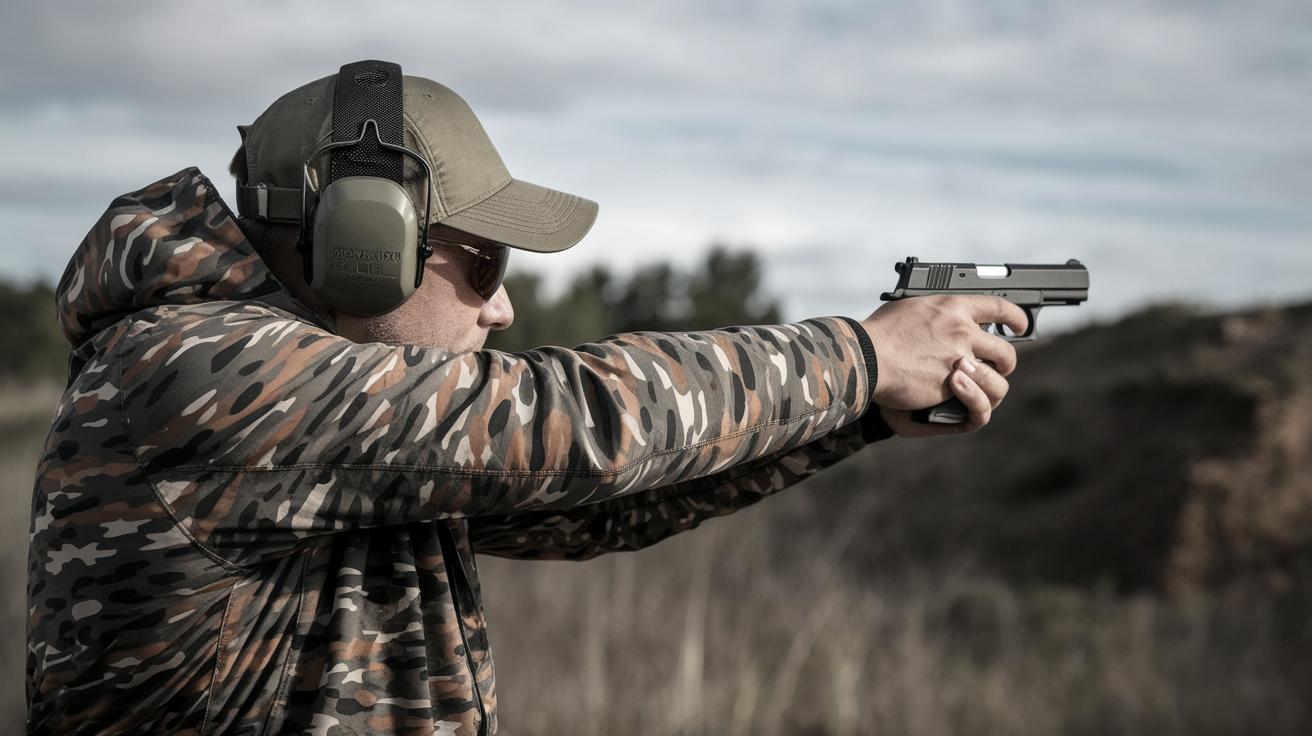
Semi-automatic pistols represent a significant evolution in firearm technology, balancing power with usability. These handguns perform multiple functions automatically: they utilize the energy from firing a bullet to eject the spent casing and load a new round into the chamber. Such pistols have become prevalent due to their ease of use, reliability, and rapid-fire capability without needing to manually cock the hammer or operate a bolt-action mechanism after each shot.
Central to the operation of semi-automatic pistols is the slide—a sizeable upper portion of the firearm that moves back and forth during shooting. As a bullet is fired, the slide is pushed back by recoil energy, fulfilling the critical tasks of casing ejection and chamber reloading. This functionality is dependent on a complex dance of springs and pressure variants, enabling the pistol to perform these actions within fractions of a second. The intricate mechanics behind semi-automatic pistols reveal astounding advances in firearm design, reflective of society’s continual push toward optimization and efficiency in tool development.
Revolvers
Revolvers are unique in the world of firearms due to their distinctive design and cycling mechanism. Unlike semi-automatic pistols, revolvers house ammunition within a rotating cylinder, often holding five to nine rounds. Upon firing, the cylinder rotates, aligning a new chamber with the barrel. This straightforward yet effective system offers reliability, simplicity, and often a more contained and durable firearm experience, making revolvers a long-time staple of both historical and contemporary gun culture.
The revolver design offers mechanical robustness, with fewer moving parts subject to wear and failure than semi-automatics. This simplicity is often valued in environments where maintenance may be challenging. Additionally, revolvers eliminate the possibility of accidental jams—a pivotal advantage in high-stress scenarios. While revolver technology may not match the rapid-fire capabilities of semi-automatics, it continues to enchant users through its historical charm and dependability, remaining a steadfast choice for many firearm enthusiasts and professionals.
Related HowStuffWorks Links
Delving deeper into the mechanics of firearms, exploring articles and tutorials can provide further clarity and understanding. For those intrigued by the engineering behind these tools or seeking in-depth technical descriptions, several resources offer valuable insights. Websites like HowStuffWorks provide comprehensive breakdowns of not only firearms but various technologies, demystifying their inner operations.
Engaging with platforms that collate expert insights, visual aids, and historical context helps to broaden one’s understanding of how firearms have developed and operate in today’s landscape. By complementing text-based descriptions with videos and interactive guides, these sources enhance the learning experience, catering to both visual and auditory learners and enriching the knowledge journey for any aspiring firearm scholar or enthusiast.
Future Prospects
| Section | Summary |
|---|---|
| Trigger Mechanism | Explores the role of the trigger in initiating the firing process, with types including single-action and double-action for efficiency and control. |
| Semi-automatic Pistols | Highlights how these pistols automate the ejection of casings and loading of new rounds, allowing repeated firing with minimal manual input. |
| Revolvers | Details the unique cylinder mechanism of revolvers, discussing their reliability, simplicity, and cultural significance in the history of firearms. |
| Related HowStuffWorks Links | Encourages exploration of educational resources for a deeper understanding, with links to detailed articles and visual aids. |