
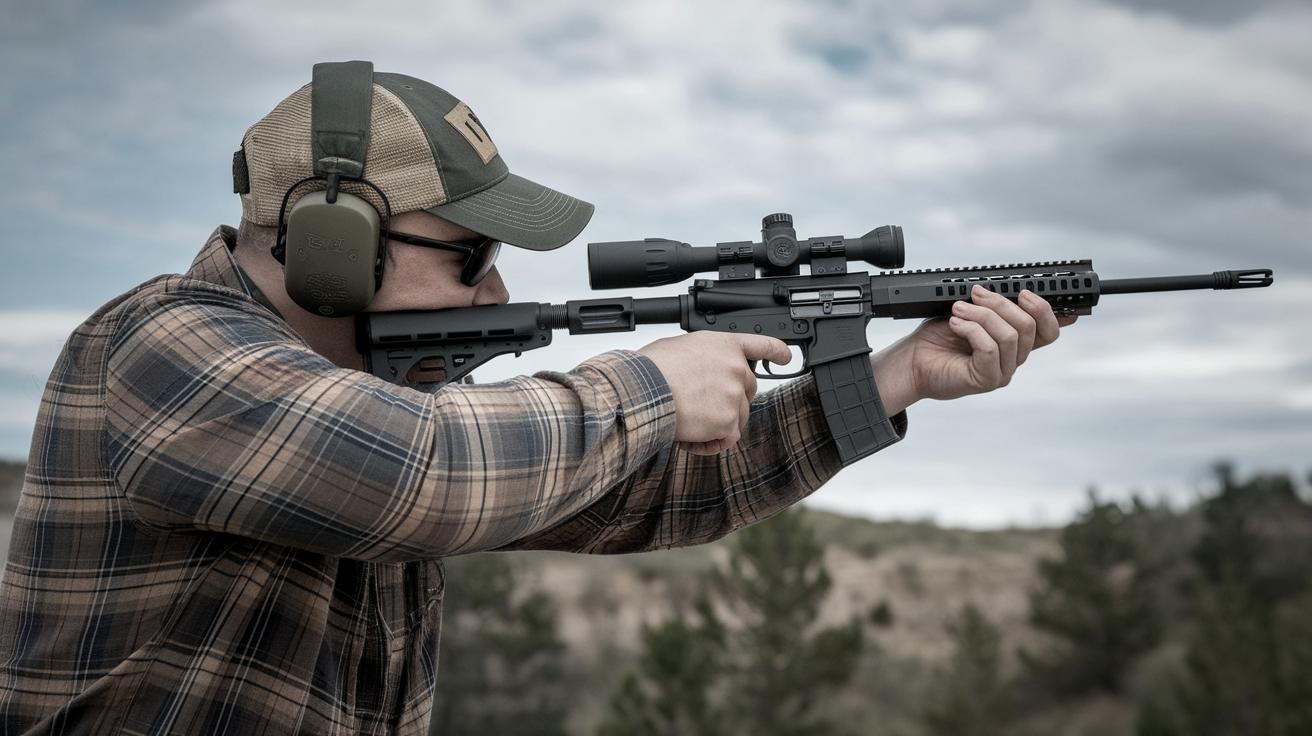
Is Shooting a Gun Hard?
Many people wonder whether shooting a gun is a simple task or a skill that requires significant practice and understanding. This blog post aims to explore the intricacies of handling a firearm effectively. We’ll delve into the fundamental components that contribute to proper shooting technique, such as the power stance, high hand grasp, hard grip, and focusing on the front sight. Additionally, we’ll discuss the crucial role of smoothly rolling the trigger and offer some practical suggestions for those looking to improve their shooting skills. Whether you’re a novice aiming to get started or someone looking to refine your technique, understanding these elements can pave the way for more effective and safer gun handling.
The “Power Stance”
The foundation of effective shooting lies in a solid and balanced stance, often referred to as the “power stance.” This begins with aligning your feet shoulder-width apart to maintain balance and stability. Your weight should be slightly forward on the balls of your feet, which promotes control and readiness to absorb recoil. A power stance provides the core stability necessary for accurate shooting, reducing the overall impact of the gun’s kickback.
Alongside stability, maintaining a slight bend in your knees is crucial to enhancing mobility and quick adjustments. This readiness posture allows you to transition smoothly between targets if needed, and it lends to a more fluid shooting experience. Mastering the power stance can significantly improve one’s shooting accuracy and reduce fatigue during longer sessions at the range.
High Hand Grasp
Another critical element in effective shooting is ensuring a high hand grasp on the firearm. This involves positioning your hand as high as possible along the backstrap of the gun, which helps manage recoil and enhances control. A firm grip with your hand high on the grip aligns the barrel more naturally with your arm, providing better aim and reducing the muzzle rise during firing.
The high hand grasp is all about maximizing the surface contact between your hand and the gun. This contact is essential in distributing the forces exerted by the firearm upon discharge evenly, increasing both comfort and control. By consistently practicing this grasp, shooters can experience a marked improvement in accuracy and reduced recovery time between shots.
Hard Grip
The concept of a “hard grip” refers to the pressure you apply when holding your firearm. While a relaxed grip can lead to instability and erratic shots, a grip that is too tight can cause tension and fatigue. Finding the optimal grip pressure is key to maintaining control without sacrificing ease of motion or comfort. A good rule of thumb is to apply firm, even pressure with both hands, ensuring that the non-dominant hand supports your dominant hand.
In practice, a hard grip involves not only the pressure exerted by the hands but also conscious engagement of the wrists. Keeping your wrists strong and aligned with the firearm helps in managing recoil and maintaining sight alignment. Practicing grip control regularly will encourage muscle memory, promoting shooting precision and comfort.
Front Sight
Focusing on the front sight is essential for accurate shooting, as it ensures that your aim is true and aligned with the target. Unlike the common tendency to look at the target or the rear sights, concentrating on the front sight ensures consistent shot placement. The eyes should be trained to see a clear picture of the front sight, with the target slightly blurred in the background.
This concept extends beyond simply aligning sights; it’s about discipline and training your brain to prioritize the sight picture over natural instincts. Developing this habit contributes significantly to enhancing overall marksmanship. Shooters who master front sight focus often experience improved accuracy, especially during rapid or continuous fire scenarios.
Smoothly Roll the Trigger
One of the more nuanced aspects of shooting is learning to smoothly roll the trigger, an action that prevents unnecessary disturbances to the firearm’s alignment. Instead of jerking or slapping the trigger, shooters should aim for a gentle, continuous pull that allows the gun to fire with minimal disruption to aim.
The key to mastering trigger control lies in understanding and eliminating pre-shot anticipation. Practicing dry fire exercises can help shooters perfect this delicate balancing act, enhancing their ability to execute consistent and precise follow-through. For beginners and experienced shooters alike, focusing on a smooth trigger pull can transform shooting proficiency and lead to more satisfying performances.
Some Suggestions
For those new to shooting, enrolling in a basic firearms course offered by a certified instructor is an invaluable step. These courses provide a structured environment to learn safety, handling, and shooting techniques under expert guidance. Additionally, practice at a local shooting range is crucial to hone skills and apply learned techniques.
Furthermore, engaging with online forums and communities dedicated to shooting can offer support, advice, and camaraderie. Seeking feedback from seasoned shooters and sharing experiences can greatly enhance one’s understanding and enjoyment of the sport. Ultimately, commitment to ongoing practice and learning is the best way to improve shooting skills over time.
Leave a Reply
We welcome your thoughts and experiences. Whether you’re a seasoned shooter or a complete novice, your perspectives enrich the conversation about the art of shooting. Have you encountered challenges in any of the areas discussed above, or do you have tips to share? Leave a reply below!
| Key Component | Summary |
|---|---|
| The “Power Stance” | Provides stability and balance; essential for absorbing recoil and maintaining control. |
| High Hand Grasp | Enhances control by positioning the hand high on the grip, reducing muzzle rise. |
| Hard Grip | Involves firm pressure and wrist alignment to manage recoil and maintain sight alignment. |
| Front Sight | Focusing on the front sight ensures accurate targeting despite common tendencies to focus on the target. |
| Smoothly Roll the Trigger | Ensures consistent shooting by avoiding disruptions through gentle, continuous trigger pulls. |
| Some Suggestions | Advises on enrolling in courses, practicing at shooting ranges, and engaging with shooting communities. |