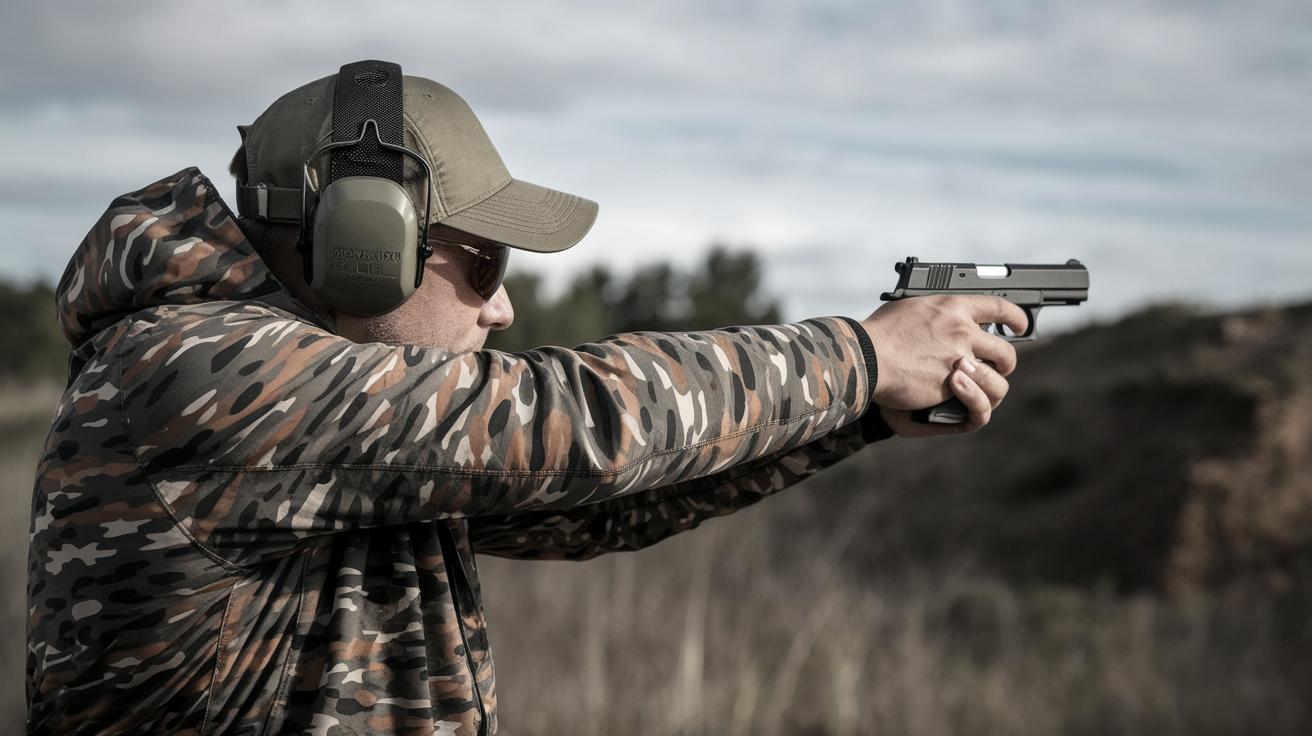
How to Shoot a Revolver
Author: Justin
Shooting a revolver requires skill, attention to detail, and a commitment to safety. This blog post will guide you through the essential techniques and practices for effectively handling a revolver. From adopting the “power stance” to mastering the art of a smooth trigger roll, each section delves into critical aspects of revolver shooting. Whether you’re a novice looking to learn the basics or an experienced shooter seeking to refine your skills, these insights offer valuable information for shooters of all levels. We will also cover helpful suggestions for optimal performance in various shooting scenarios and address common questions in the comments section. Engage in this exploration to enhance your shooting accuracy and confidence with revolvers.
The “power stance”
Achieving a stable and balanced stance is the cornerstone of accurate shooting. Known as the “power stance,” this fundamental posture involves standing with your feet shoulder-width apart, providing a solid base. Distribute your weight evenly on both legs, slightly leaning forward at the waist to create a stable center of gravity. This position not only aids in recoil management, but also enhances your overall shooting stability.
The power stance also incorporates knee flexion to help absorb recoil and maintain balance. Keeping your knees slightly bent rather than locking them straight allows you to react more fluidly to the gun’s kickback. Maintaining this posture enables a seamless release of energy in your shots and ensures you remain grounded and steady.
High hand grasp
A high hand grasp is critical to effectively controlling the revolver during firing. Begin by positioning your dominant hand high on the revolver’s backstrap, allowing for optimum control over the gun. The thumb should rest over the cylinder release with the web of your hand pressed firmly against the backstrap, creating maximum leverage.
Your support hand plays an important role in stabilizing the revolver. Place your non-dominant hand alongside the gripping hand, using fingers to wrap the cylinder frame. This two-handed grip ensures a firm hold, reducing the revolver’s muzzle rise and allowing for quicker follow-up shots. Practice this grip until it’s second nature, as it deeply influences your shooting accuracy and control.
Hard grip
Maintaining a strong grip on your revolver is pivotal for proficient shooting. A hard grip involves tightly wrapping your fingers around the revolver’s grip and ensuring there is enough pressure to prevent any slipping or twisting during recoil. An effective way to develop a hard grip is by squeezing a rubber ball or using grip trainers off-range to improve hand strength and stamina.
A common mistake shooters make is gripping either too firmly, causing muscle fatigue, or too loosely, allowing the revolver to become unsteady. Strive for a balanced grip that ensures both control and comfort. Regular practice will enable you to determine the optimal pressure needed to maintain your revolver consistently aligned with your target.
Front sight
The front sight of a revolver is paramount for targeted accuracy. Mastering the art of front sight focus requires practice and discipline. Fix your gaze on the front sight and align it perfectly in the rear notch. The front sight should be crystal clear while the target appears slightly blurry, ensuring that your aim is precise.
Many novice shooters fixate too much on the target, which can lead to misalignment and errant shots. The key is to prioritize the front sight every time. Practicing this focus consistently will help engrain it into your shooting habit, leading to tighter shot groupings and improved accuracy over time.
Smoothly roll the trigger
Trigger control is arguably the most critical component of shooting a revolver accurately. The mantra to follow is to “smoothly roll the trigger.” This means applying steady, gradual pressure backwards without disturbing the alignment of your sights. A smooth trigger pull enhances shot placement and reduces the chance for error.
A helpful technique is practicing dry firing, which involves firing the gun without live ammunition, to refine this skill. This allows you to focus on finger movement and pressure without the distraction of recoil. Over time, you will develop a rhythm and finesse that leads to consistent shooting precision, especially under pressure.
Some suggestions
Regardless of skill level, there’s always room for improvement in shooting a revolver. One suggestion is to record your shooting sessions to review your form and technique. This often reveals subtle mistakes or habits that can be corrected to improve performance.
Additionally, joining a shooting club or taking lessons from an experienced instructor can provide invaluable feedback and insights. The shared experiences and support from a community of shooters can accelerate skill development and foster a deeper appreciation for the art of shooting.
LEAVE A REPLY
We welcome your insights and experiences in the comments section below. Have you tried any of these techniques? What challenges have you faced while shooting a revolver? Your input enriches our community and encourages an ongoing dialogue about best practices and innovative techniques in the world of shooting sports.
Future Prospects
| Technique | Description |
|---|---|
| Power stance | Establish a stable base, leaning slightly forward with knees bent. |
| High hand grasp | Position your hand high on the backstrap for optimal control. |
| Hard grip | Apply firm pressure to maintain a steady aim during recoil. |
| Front sight | Focus on the front sight for precise aiming. |
| Smooth trigger roll | Gently pull the trigger to prevent misalignment. |