The Essential Guide to Holding a Handgun Properly
Handling a handgun correctly is a crucial skill for both safety and accuracy. Whether you’re a seasoned shooter or a novice, understanding the fundamentals of proper handgun handling can significantly enhance your shooting experience. This guide will explore several essential techniques for holding a handgun safely and effectively. With instructions on creating a steady grip, controlling your breathing, and precisely pulling the trigger, you’ll learn how to transform each shot into a display of accuracy. By internalizing these techniques, you’ll not only improve your shooting skills but also ensure safety, which is paramount. Read on to discover the key aspects of handgun management.
Use Two-handed Grip
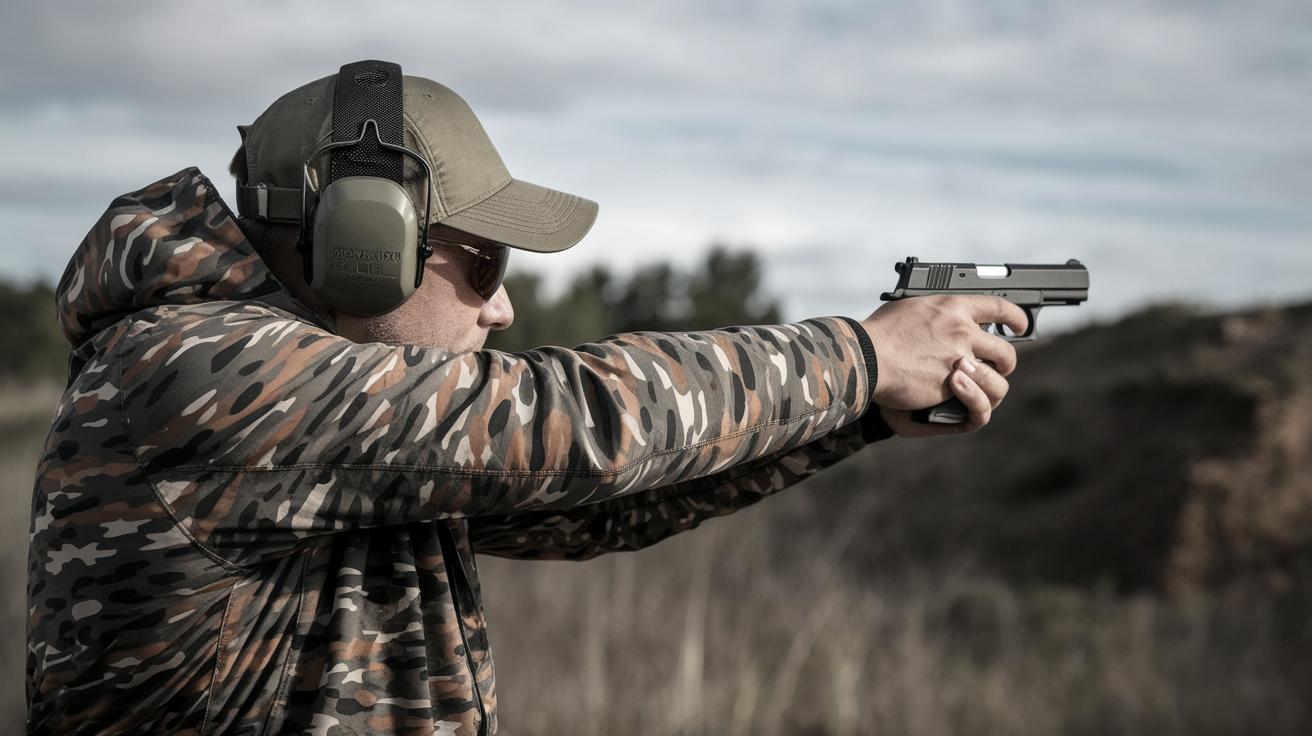
The two-handed grip is one of the most stable methods of holding a handgun, ideal for enhancing accuracy and control. By using both hands, you spread the recoil across a larger area which can make it much easier to manage. Start by wrapping your dominant hand around the grip with your finger resting along the side of the gun, not on the trigger. Keep your wrist aligned with the barrel, ensuring that your grip is neither too loose nor excessively tight, striking a balance that secures control while maintaining comfort.
Next, bring your non-dominant hand up from below, wrapping it around the front of your dominant hand. Your fingers should encircle the remaining portion of the grip, while your thumb rests atop the thumb of your dominant hand. This consistent contact between your hands creates a stable firing platform, enabling better recoil management and increased precision.
Find the Right Grip Strength
A common mistake made by shooters is applying incorrect grip strength. Too tight a grip can lead to rapid fatigue and affect your control, while too loose a grip could increase gun movement, affecting aim. The key is finding a middle ground where your weapon feels secure yet comfortable.
To assess the perfect grip strength, practice with an unloaded handgun, adjusting your grip to ensure stability without tension. Your grip should be firm enough to manage recoil but relaxed enough to prevent hand shaking. As you practice, pay attention to how your grip affects your aim and adjust as necessary, aiming for consistency in your approach.
Place One Hand Under the Other
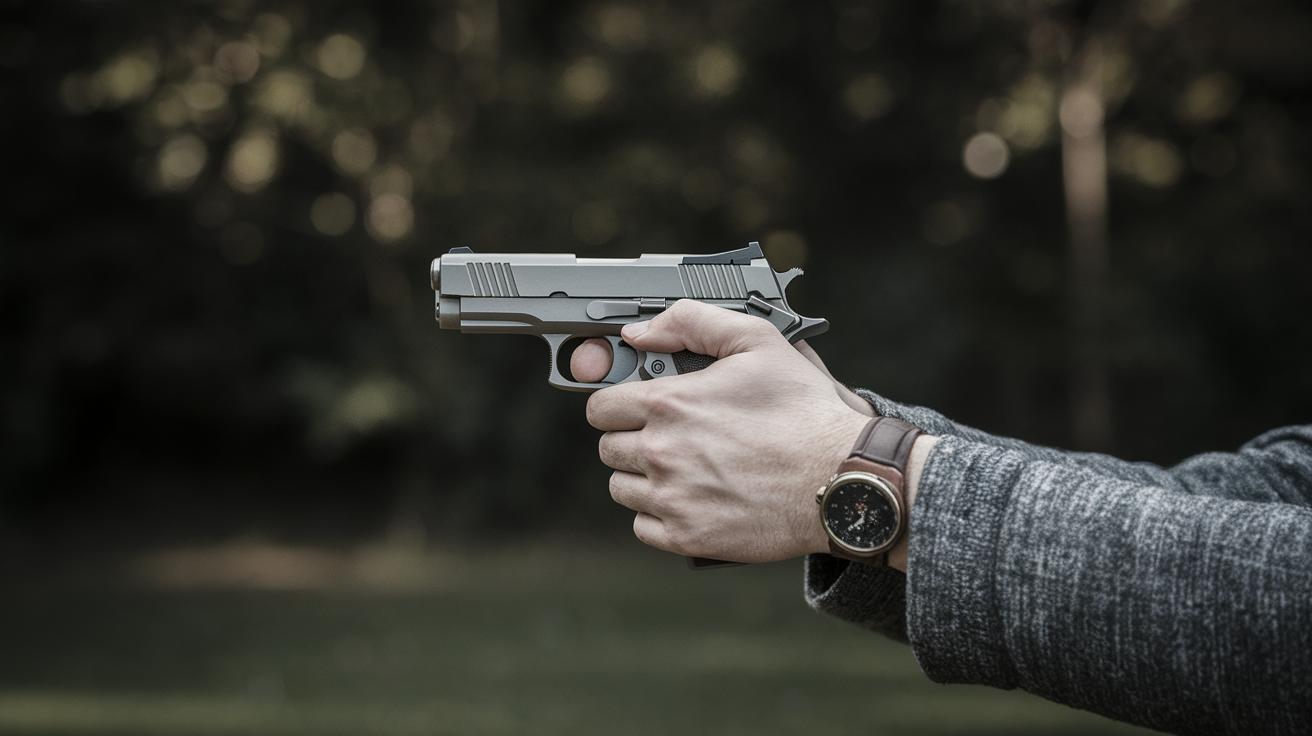
Placing one hand under the other is a technique that provides added support to the firearm, reducing muzzle flip post-shot. This position allows you to harness the full breadth of both hands, offering stability that a single hand can’t achieve alone. Begin by holding the gun with your dominant hand, then slide your non-dominant hand beneath it, supporting both the gun and your primary hand.
This auxiliary support effectively mitigates recoil and enables a steadier shot by maintaining alignment through the firing sequence. Practicing this alignment during training will enhance your overall shooting discipline and make your handling more intuitive over time.
Use Opposite Forces
To master handgun control, employing opposite or counter forces with your hands is crucial. Your dominant hand should push the gun forward while your non-dominant hand counteracts by pulling back softly. This subtle tension creates a balanced force that stabilizes your grip, allowing more consistent aiming and shooting.
This principle of using opposite forces helps counteract the upward and backward force generated when firing. The goal is a seamless continuation of the line of sight throughout the shooting process, enhanced by the constant, equal tension from both sides of the grip. With practice, this muscle coordination becomes second nature.
Top of the Barrel Up, Bottom of the Handle Down
Understanding the orientation of the gun relative to your body is vital for maintaining accuracy. The top of the barrel should be slightly raised, and the bottom of the handle angled downwards. This inclination helps guide the bullet along an optimal trajectory while staying consistent with your natural line of sight.
The angle ensures that recoil is directed in a controlled manner, preventing excessive muzzle rise. As you cultivate this aspect of your shooting technique, it will become more intuitive, minimizing off-target deviation and promoting effective firing patterns.
Control Your Breathing
Breathing control is an often-overlooked, yet fundamental, component of accurate shooting. Before taking your shot, take a deep breath and slowly exhale. This rhythmic breathing can relax your body and steady your aim. Attempt to fire at the bottom of your exhalation when your body is most settled.
In tense or high-pressure situations, maintaining a consistent breathing pattern will help calm your nerves and steady your hand. Incorporating focused breathing into your shooting routine can enhance your precision considerably, making each shot smoother and more deliberate.
Pull the Trigger Slowly
A crucial step in the shooting process is pulling the trigger, and doing so slowly can greatly impact your accuracy. A fast or jerky trigger pull often results in missed targets, as it can unintentionally shift the alignment of your gun. Instead, aim for a gradual pressure increase on the trigger until the shot is released.
This deliberate, calm approach ensures that you’re controlling the trigger rather than it controlling you. Practice this by dry firing your handgun safely, focusing on the continuous and even pull needed for a crisp discharge. With repetition, this becomes a reflexive motion that complements your overall shooting accuracy.
Final Thoughts on How to Hold a Handgun
After exploring the intricacies of proper handgun grip and control, it’s evident that combining these strategies can lead to improved accuracy and safety. Recognize that regular practice and an understanding of these techniques are fundamental to developing confidence and precision in handling a firearm. Join training sessions, group discussions, or online communities that focus on safe and responsible use of handguns to keep learning and improving your skills.
1 comment
John Doe:
Great article! I found the sections on breathing and grip strength particularly useful. Thanks for the insights!
Leave a comment
Your feedback is valuable. Share your thoughts and experiences with us in the comments section below!
| Technique | Description |
|---|---|
| Two-handed Grip | Increases control and accuracy by spreading recoil over both hands. |
| Grip Strength | Ensures stable control without tension or fatigue. |
| Hand Placement | Provides additional support and reduces muzzle flip by positioning one hand under the other. |
| Opposite Forces | Balancing hand tension helps stabilize the gun during firing. |
| Barrel Orientation | Properly angles the barrel up and handle down for optimal trajectory. |
| Breathing Control | Steadies aim by synchronizing breath with firing. |
| Trigger Action | Slow trigger pulls enhance precision by maintaining alignment. |