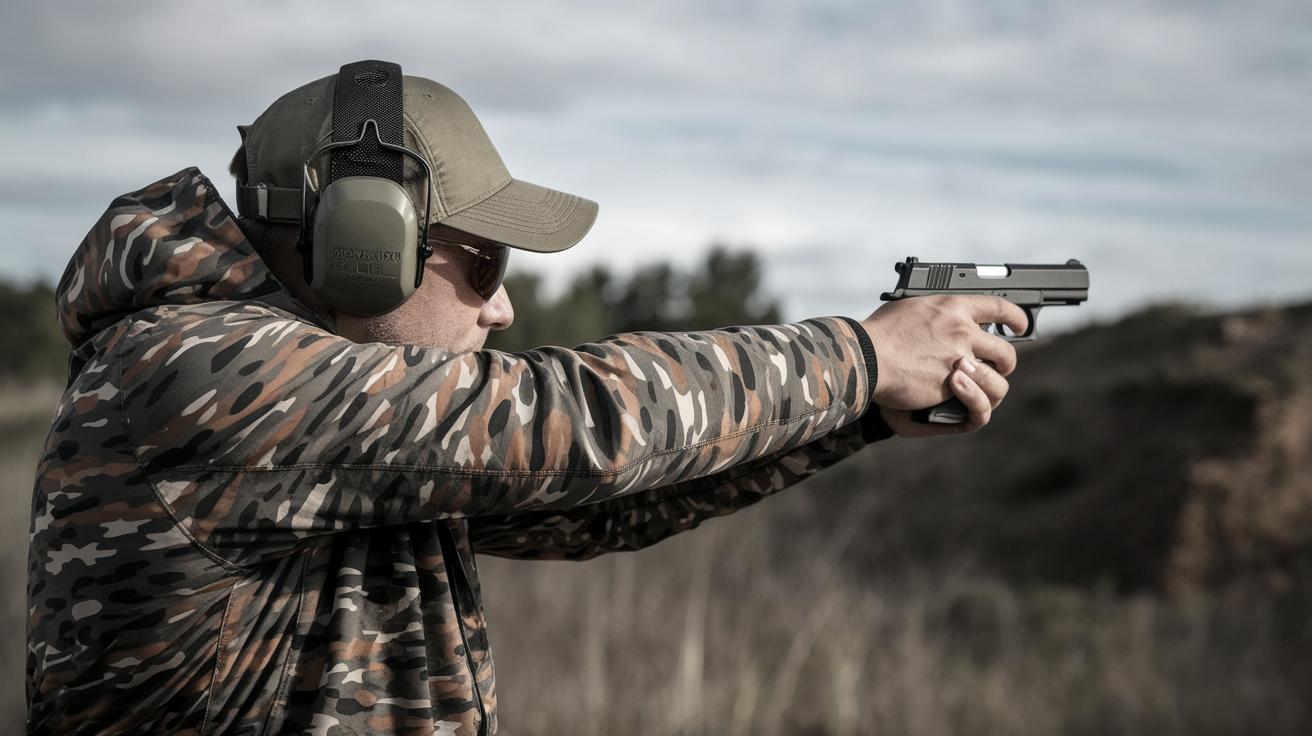
How to Shoot a Pistol Accurately
Learning how to shoot a pistol accurately is an essential skill for anyone interested in firearms. Whether you’re a beginner or looking to refine your skills, understanding the fundamentals of pistol shooting is crucial. In this blog post, we’ll explore six key elements that contribute to accurate shooting. We’ll cover the “power stance,” which provides a stable foundation; the “high hand grasp” for better control; establishing a “hard grip” without causing fatigue; focusing on the “front sight” for aim; and how to “smoothly roll the trigger” to avoid jerking. Additionally, we will offer practical suggestions to enhance your shooting experience. By mastering these elements, you’ll significantly improve your accuracy and confidence with a pistol.
The “power stance”
The foundation of accurate shooting begins with the power stance, providing stability and balance. A proper stance minimizes body movement, which ensures consistent aim and shot placement. To achieve this, stand with your feet shoulder-width apart and your knees slightly bent. This stance should mimic the way you’d brace yourself in a situation requiring balance and control.
Lean slightly forward from your hips, ensuring that your weight is distributed evenly on the balls of your feet. This forward-leaning position helps in absorbing recoil and maintaining control over the pistol. Consistent practice in this position will enable you to remain stable during shooting, thus improving your precision over time.
High hand grasp
The high hand grasp is crucial for effective control of your pistol. By positioning your hand as high on the backstrap of the pistol as possible, you minimize the leverage of recoil over your wrist. This positioning allows you to maintain control over the movement of the pistol, particularly during successive shots.
Ensure that your thumb is placed along the frame, with your trigger finger resting on the trigger. Your support hand should wrap around your strong hand, creating a firm yet comfortable grip. This high hand grasp stabilizes the pistol’s movement, making it easier to realign your sights on target after each shot.
Hard grip
Establishing a hard grip is essential for control and consistency during shooting. A firm grip helps negate the effects of recoil, providing a more stable shooting experience. However, it’s important to balance firmness with comfort; gripping too tightly can lead to fatigue and shaking, which can disrupt your aim.
A proper grip involves squeezing the pistol with firm pressure from both hands, ensuring that the force is evenly distributed. Focus on applying pressure from front to back of the grip rather than from side to side. Gradually increasing grip strength through practice can enhance your control while preventing strain and improving your overall shooting accuracy.
Front sight
Focusing on the front sight is pivotal for accurate shooting. Your eyes should be aligned in such a way that the front sight is clear and sharp, while the rear sight and target remain slightly blurred. This alignment ensures that your shots hit the intended target consistently.
Concentrate on the front sight post as you acquire your target. Maintaining sight alignment while addressing target movement or recoil can be challenging, but persistence will improve proficiency. Practicing sight picture drills regularly will help develop muscle memory, leading to faster and more accurate target acquisition.
Smoothly roll the trigger
Proper trigger control is a key component of accurate shooting. “Rolling” the trigger involves applying steady pressure until the shot breaks. Jerky or abrupt motions can disturb your aim. Instead, focus on squeezing the trigger smoothly and consistently.
Practice dry firing exercises to develop muscle memory and a smooth trigger pull. By removing ammunition and ensuring a safe environment, dry firing allows you to refine your trigger control without the distraction of recoil. A consistent and smooth trigger pull will lead to tighter shot groups and improved shooting accuracy.
Some suggestions
To enhance your pistol shooting skills, regular practice is vital. Incorporate drills that emphasize each aspect of shooting, such as sight alignment, trigger control, and rapid target acquisition. Diverse scenarios allow for adaptation and growth in different shooting conditions.
Seeking guidance from experienced shooters or instructors can provide valuable insights into your shooting techniques. Joining a shooting club or participating in competitions can introduce you to a community of shooters who share tips and offer constructive feedback, further honing your skills.
LEAVE A REPLY
We hope you found these tips helpful for improving your pistol shooting accuracy. If you have any questions, suggestions, or personal experiences you’d like to share, please leave a comment below. Your feedback is invaluable to us, and we look forward to engaging with our community of readers.
Lessons Learned
| Technique | Description |
|---|---|
| Power Stance | Provides stability and balance through a shoulder-width stance and slight forward lean. |
| High Hand Grasp | Ensures control by positioning the hand high on the backstrap and wrapping the support hand. |
| Hard Grip | Combines firmness with comfort to manage recoil without causing fatigue. |
| Front Sight | Focuses on front sight clarity for consistent target acquisition and accuracy. |
| Smooth Trigger Roll | Emphasizes a smooth, consistent trigger pull to prevent jerking and aim disruption. |
| Practice & Community | Recommends regular practice, instructor guidance, and community engagement for improvement. |