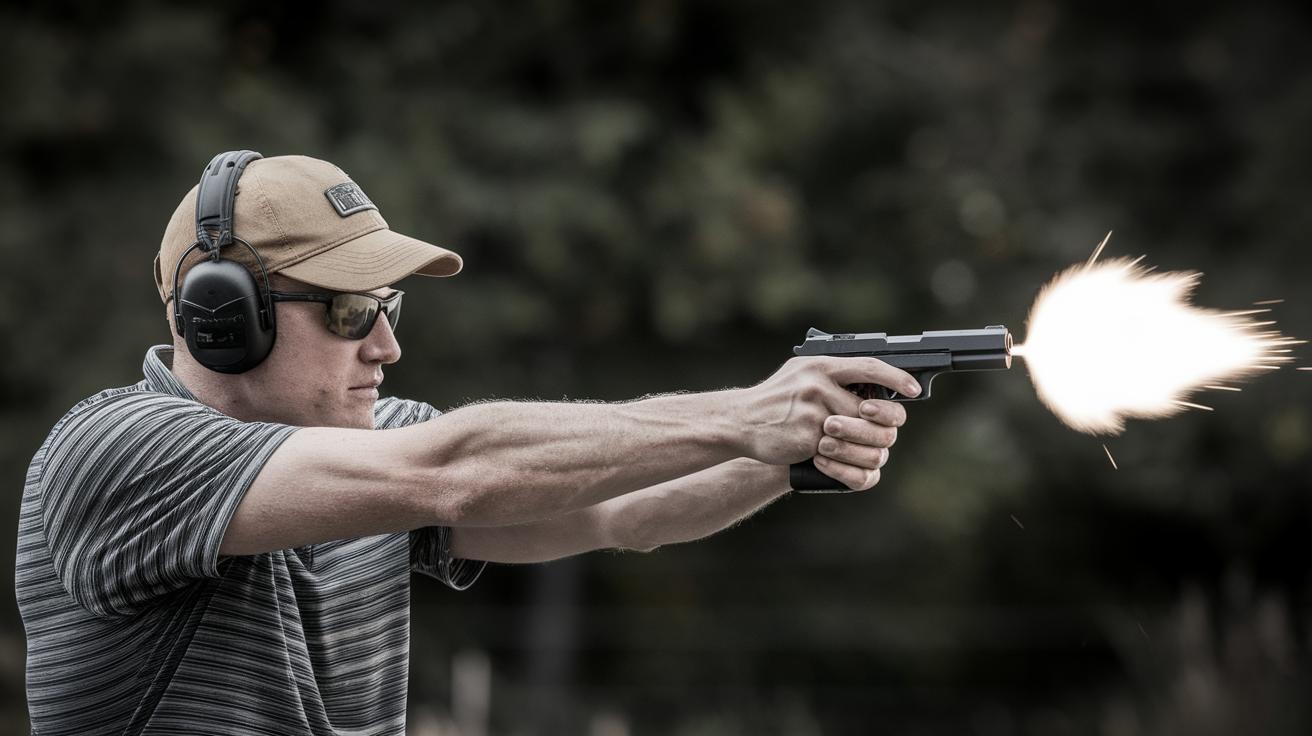
The Speed of a Pistol Shot: A Comprehensive Overview
Firearms have fascinated and mystified people for centuries. A single pull of the trigger releases a bullet that travels faster than the eye can see, but how fast, exactly, does this happen? The speed at which a pistol shoots involves a complex interplay of science and engineering, relying heavily on physics principles and gun mechanics. By understanding the forces at play—from the moment a gun is fired to the bullet’s impact—readers can gain a deeper appreciation for the technology behind firearms. In this blog post, we delve into the key aspects of what makes a bullet travel so quickly, exploring Newton’s laws, the physics of sound, and providing related articles from HowStuffWorks to broaden your understanding.
Sign up for the Live Science daily newsletter now
Live Science is your go-to source for a daily infusion of fresh insights into the world of science and technology. Understanding the speed of a pistol shot requires rooting our knowledge in fundamental scientific principles, and Live Science offers exactly that in an accessible format. By subscribing to their daily newsletter, you can keep up with the latest scientific discoveries, including intriguing facts about physics that pertain to firearms and ballistics.
Regular updates from Live Science can help you expand your understanding beyond just the initial speed of a bullet. You’ll explore the wider implications of physics in various aspects of life, making the knowledge applicable to real-world scenarios. Whether it’s through engaging articles, breaking news, or detailed studies, this daily newsletter provides a comprehensive learning experience in the field of science and technology.
Applying Newton’s First Law to Physical Objects
Newton’s First Law of Motion, also known as the Law of Inertia, is a fundamental principle in understanding how pistols achieve such high velocities. This law states that an object at rest will stay at rest, and an object in motion will remain in motion at a constant velocity unless acted upon by an external force. When you pull the trigger of a pistol, this external force is exerted by the expanding gases produced from the ignition of gunpowder within the cartridge.
The mechanics of a pistol involve converting chemical energy into kinetic energy. Once the primer ignites the propellant, gases rapidly expand, applying pressure to drive the bullet down the barrel. The gun barrel’s rifling, spiral grooves carved into its interior, further increases speed and accuracy, causing the bullet to spin. This spin aids in maintaining the bullet’s velocity and trajectory, as mastery of inertia minimizes air resistance and external forces that could divert its path.
Understanding the application of Newton’s laws provides insight into why different firearms have varied velocities. Barrel length, caliber, and ammunition type all contribute to the differences in speed we observe between pistols, rifles, and other firearms. This is pivotal in determining a weapon’s effectiveness for various purposes—from military applications to self-defense or sport shooting.
The Physics of Sound Waves
When a pistol is fired, the sound it produces is not merely a byproduct but an integral component of the physics involved. A gunshot creates sound through rapid air displacement, producing shock waves. These waves travel faster than the speed of sound, contributing to the crack heard as the bullet breaks the sound barrier, demonstrating a practical application of sound waves in high-speed scenarios.
The magnitude of the gunshot’s sound is influenced by various factors, including the bullet’s velocity and the environment in which the gun is fired. A typical pistol shot can range from 120 to 160 decibels—significantly higher than the average human pain threshold for sound. This necessitates protective measures, such as ear protection in shooting ranges, to avoid damage.
Additionally, the Doppler effect plays a role here; as the bullet travels away from the listener, the sound changes pitch. This effect is also observed with fast-moving vehicles and is a crucial concept in understanding the dynamics of sound waves in relation to moving objects like bullets.
Related HowStuffWorks Articles
HowStuffWorks provides a treasure trove of articles that illuminate the intricacies of firearm mechanics and physics principles involved. Readers interested in understanding the science behind a bullet’s velocity may find “How Guns Work” and “How Gunpowder Works” particularly enlightening. These articles provide foundational knowledge of the components and inner workings of firearms.
For those intrigued by ballistics, “The Physics of Bullets” dives deeper into the complexities associated with bullet design and dynamics. It explains the factors that affect a bullet’s trajectory and ultimately, its impact upon target, equipping readers with the context needed to appreciate the physical laws that govern bullet movement.
Other noteworthy articles include “The Science of Sound Barriers” and “Understanding Firearm Safety,” which round out a comprehensive reading list for an audience aiming to grasp the multifaceted science behind pistol velocities. Whether you’re an aspiring firearm enthusiast or a seasoned aficionado, these resources offer an in-depth look into the remarkable world of firearm physics.
Lessons Learned
| Aspect | Summary |
|---|---|
| Newton’s First Law | Pistols convert chemical energy to motion, driven by expanding gases under pressure, demonstrating inertia in action to propel bullets at high speeds. |
| Sound Waves | Firing a pistol creates shock waves that travel faster than sound, impacting the environment and demonstrating principles like the Doppler effect. |
| Related Knowledge | HowStuffWorks articles offer further exploration into firearm mechanics, gunpowder effects, bullet dynamics, and sound barriers, deepening understanding of ballistics. |