
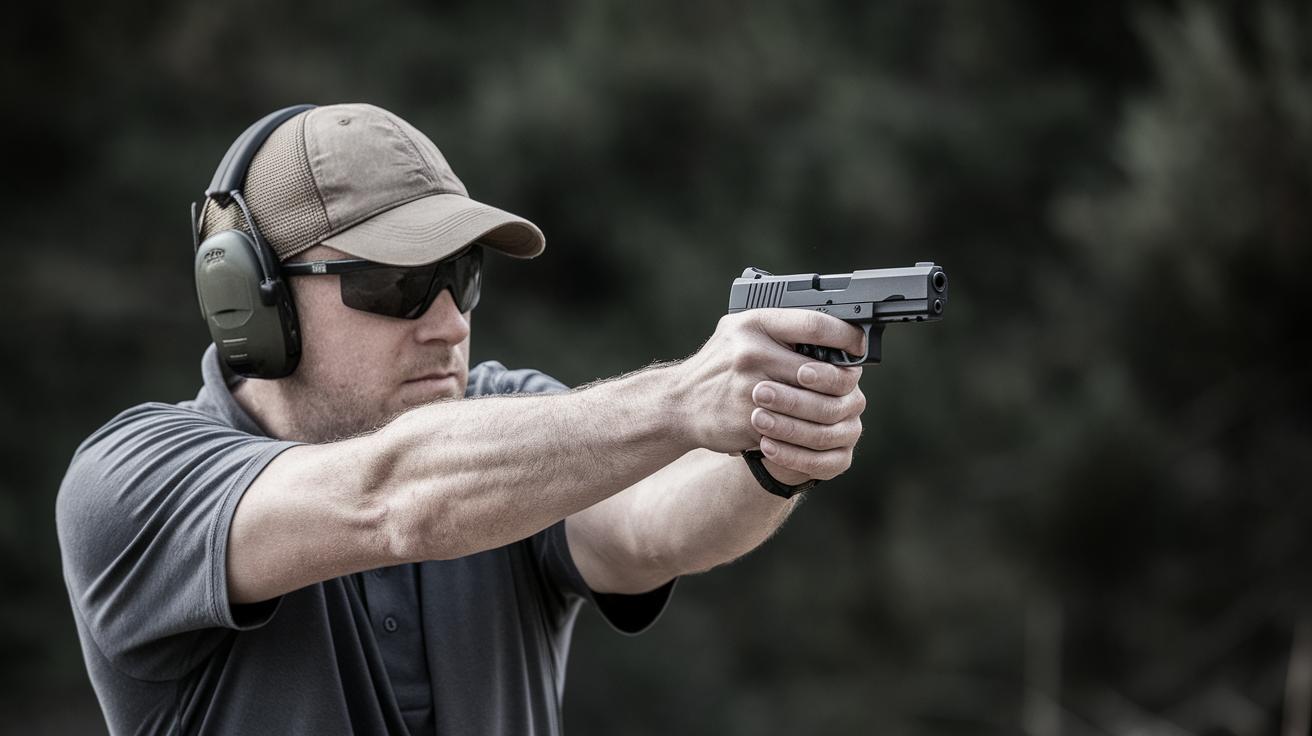
The Best Ways to Shoot a Pistol: A Comprehensive Guide
Shooting a pistol with proficiency involves mastering several critical elements that ensure accuracy, safety, and control. In this guide, we delve into essential techniques like adopting the correct power stance, employing a high hand grasp, and maintaining a hard grip. We also emphasize the importance of focusing on the front sight and smoothly rolling the trigger for precision shooting. This blog post is designed to provide both novice and experienced shooters with practical advice and suggestions, enriching their shooting experience and enhancing their skills. Join us as we explore these topics in detail, empowering you to become a more effective and confident shooter.
The “power stance”
Adopting a correct stance is foundational to shooting a pistol effectively. The power stance provides the necessary balance and grounding that enhances shooting stability. To achieve this, stand with your feet shoulder-width apart, and bend your knees slightly to create a resilient base. Your dominant foot should be slightly behind your non-dominant foot, roughly at a 45-degree angle, distributing your weight evenly.
This posture not only grounds the shooter but also mitigates the recoil impact when the pistol is fired, allowing for quicker target re-acquisition. The power stance is adaptable to different shooting situations, from shooting ranges to defensive scenarios, making it a versatile and valuable technique for enhancing shooting accuracy and control.
High hand grasp
The high hand grasp is crucial for controlling the pistol and ensuring accuracy. It involves positioning your hand as high as possible on the grip of the pistol. This reduces the leverage the gun has against you during recoil, thereby granting you more control over the firearm. The web of your hand should be placed firmly against the top curve of the grip, with your fingers wrapping securely around the grip itself.
The thumb of the shooting hand should be aligned with the slide of the pistol, while the support hand wraps around the dominant hand, offering additional stability and control. This technique diminishes muzzle flip and ensures that the shooter can swiftly return to their initial aiming position, enhancing both speed and accuracy with consecutive shots.
Hard grip
A hard grip is integral to managing recoil effectively and maintaining control over the pistol during firing. Gripping the pistol with sufficient firmness is essential, as a weak grip can lead to slippage or inaccurate shots. The key lies in maintaining a balanced yet strong grip without inducing tremors through excessive force.
Your grip should feel like a firm handshake – strong but not straining. Both hands should exert pressure equally, providing a solid support system for the pistol. This setup not only retains control over the firearm but also encourages consistent accuracy by maintaining the alignment of the pistol with the target.
Front sight
Focusing on the front sight is among the most critical aspects of precision shooting. Aligning the front sight with the rear sight and target creates a consistent point of aim. Eyes should primarily focus on the front sight, allowing the target and rear sight to appear slightly blurred, a technique known as front sight focus.
By concentrating on the front sight, shooters ensure the barrel is pointed accurately at the target, which significantly enhances accuracy. This principle of sight alignment and focus is fundamental in both static range shooting and dynamic environments, paving the way for improved shooting precision over time.
Smoothly roll the trigger
A smooth and controlled trigger pull is vital to accurate shooting. Jerking or slapping the trigger can result in shots veering off-target. Instead, focus on applying steady pressure until the shot breaks. Think of it as smoothly rolling through the trigger pull rather than abruptly squeezing it.
Maintaining this technique minimizes muzzle movement and aligns the sights with the target throughout the trigger pull. Regular practice facilitates muscle memory, allowing shooters to maintain focus on the front sight while executing a seamless trigger pull, ultimately resulting in more precise and consistent shots.
Some suggestions
Practice is key to proficiency. Regularly engage in dry fire exercises to hone these skills without the distraction of live ammunition. This not only builds familiarity with your firearm’s mechanics but also reinforces muscle memory for the aforementioned techniques.
Consider professional training sessions to receive personalized feedback and tailored drills that target your specific areas for improvement. By engaging with experienced instructors, you gain insights into fine-tuning your technique, enhancing both your skill set and confidence in handling a pistol under various conditions.
LEAVE A REPLY
We value your thoughts and experiences! Share your insights or questions about pistol shooting in the comments below. Whether you’re a beginner or seasoned shooter, your contributions enrich our community and help foster a space where we can all learn and grow in our shooting skills.
Summary of main points
| Technique | Description | Benefit |
|---|---|---|
| The “power stance” | Feet shoulder-width, dominant foot back, slight knee bend | Enhances balance and recoil management |
| High hand grasp | Hand positioned high on grip, thumb aligned with slide | Maximizes control over recoil and quick target acquisition |
| Hard grip | Firm, balanced grip with equal pressure from both hands | Maintains firearm stability and consistent accuracy |
| Front sight | Focus primarily on the front sight for alignment | Improves target accuracy and consistency |
| Smoothly roll the trigger | Steady pressure on trigger until shot breaks | Reduces muzzle movement, enhances precision |
| Suggestions | Engage in dry fire practice, seek professional training | Develops skill, familiarity, and shooting confidence |