
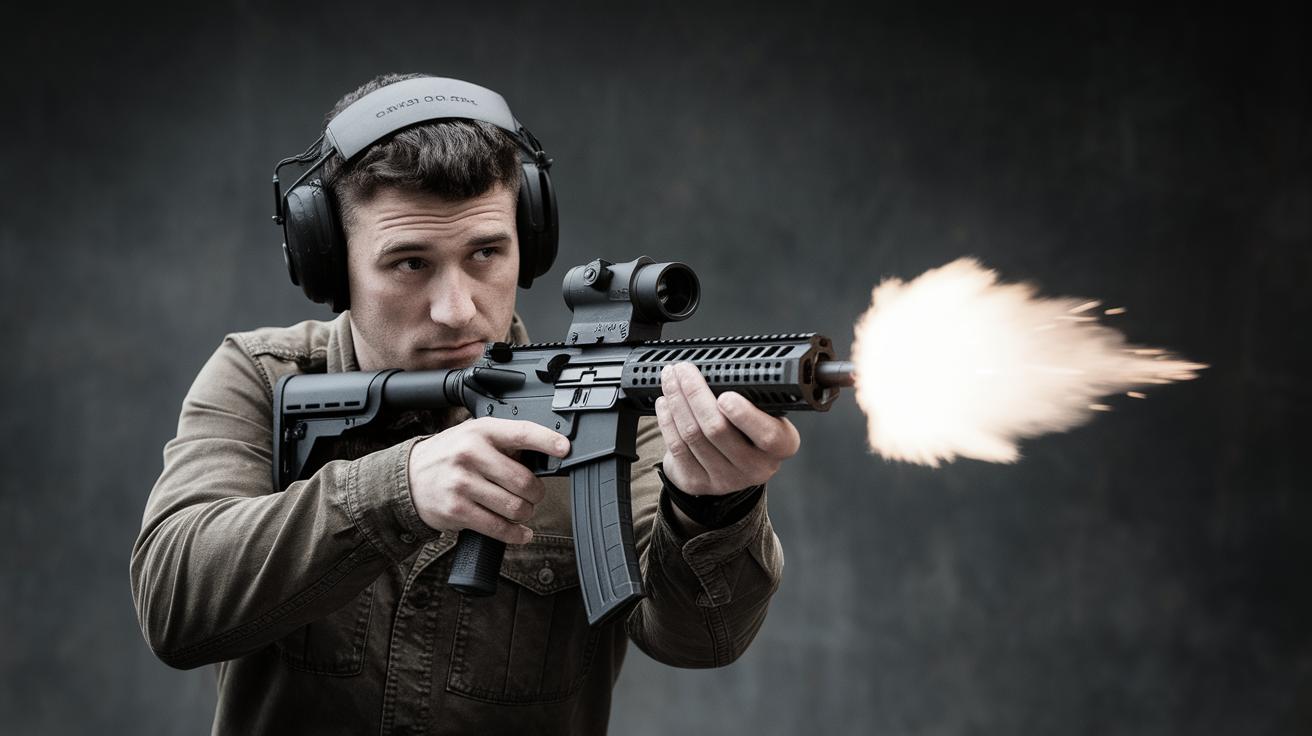
The Mechanics Behind Firearms: How Guns Work
Firearms hold a significant place in both history and modern society, shaping the political and cultural landscapes of nations. Understanding how guns work allows us to appreciate both their technological complexity and potential impacts. This exploration delves into the mechanics behind different types of firearms. We’ll start by looking at revolvers and semi-automatic pistols, each showcasing distinct design philosophies and engineering principles. Following that, we will examine the trigger mechanism—a fundamental component common to all firearms. This journey provides a comprehensive insight into the functionality and operation of guns, aiming to foster a better understanding of their place in our world today.
Revolvers
Revolvers are one of the oldest types of firearms, holding a special place in the history of personal weaponry. The name ‘revolver’ stems from the design feature of a rotating cylinder, which distinguishes these firearms from other types. Typically, a revolver’s cylinder can hold between five and eight rounds, and it rotates with each cock of the hammer, aligning a new cartridge with the barrel and firing pin. This simplicity and reliability have made revolvers popular as a sidearm for law enforcement and personal defense.
Mechanically, revolvers are relatively straightforward. When you pull the trigger, several things happen simultaneously: the hammer is pulled back, the cylinder rotates, and, upon the trigger’s full pull, the hammer releases, striking the firing pin or primer, igniting the gunpowder, and firing the bullet. The fired casing stays in its chamber until manually removed, and the gun is ready to fire again without the need for racking or chambering a round. This design simplicity translates into fewer chances for jams and malfunctions, making revolvers trusted tools in various high-pressure scenarios.
Semi-automatic Pistols
Semi-automatic pistols differ fundamentally from revolvers in several aspects. They are designed to automatically chamber the next round from a magazine into the firing chamber, providing quicker successive shots without manual chambering. A crucial aspect is the incorporation of recoil energy from a fired shot, which cycles the action of the gun. When a bullet is fired, the energy expended pushes the slide backward, ejecting the spent casing, resetting the hammer or firing pin, and loading the next round into the chamber from the magazine.
This automation requires more complex mechanisms, making semi-automatic pistols more intricate than revolvers. Notably, the magazine fed design enables a higher ammunition capacity, often between 7 to 17 rounds or more, depending on the model. With their rapid firing potential and ease of use, semi-automatic pistols are favored in military and law enforcement applications. However, this design also increases the potential for malfunctions like jams, requiring practice and understanding to manage effectively.
Trigger Mechanism
The trigger mechanism is a vital aspect of a firearm’s operability and safety. In essence, pulling the trigger initiates the firing sequence, releasing the hammer or striker to ignite the cartridge. Triggers come in various designs, including the double-action and single-action models. Double-action triggers perform two functions when pulled: they cock the hammer and release it to fire. Single-action triggers, on the other hand, require the hammer to be manually cocked before firing, typically offering a lighter and crisper pull.
A key safety concern is the trigger’s pull weight, which can vary significantly between different firearms. Heavier pull weights can reduce the risk of accidental discharge, while lighter triggers facilitate quicker firing. Modern firearms often incorporate manual or automatic safeties to prevent accidental firing. Understanding and respecting the trigger mechanism’s intricacies is crucial for any firearm handler, underscoring the importance of proper training and handling practices.
Related HowStuffWorks Links
For those looking to delve deeper into the world of firearms and their operation, there is a wealth of resources available. HowStuffWorks, for instance, offers detailed explanations and visual guides on various firearm components and history. These resources provide greater detail on the technical aspects and advancements in firearm technology over time. Exploring these can broaden one’s understanding of how these powerful tools function and have evolved into modern iterations seen today.
Additionally, educational platforms offer interactive modules that simulate the mechanical operation of firearms, allowing enthusiasts and professionals alike to study the inner workings without physical access. By engaging with such resources, one can gain a comprehensive understanding and appreciation for the engineering marvel that modern firearms represent. Whether you’re a seasoned professional or a curious novice, these insights can be profoundly enlightening.
Final Thoughts
The journey through the mechanics of firearms reveals the intricate balance of engineering, physics, and human ingenuity that contributes to their function. Understanding these mechanics not only satisfies curiosity but also enhances responsible handling and appreciation of firearms’ role in both historical and contemporary contexts. Below, a table summarizes the key points covered in our exploration.
| Type of Firearm | Key Features | Use Case |
|---|---|---|
| Revolvers | Simple mechanism, rotating cylinder, reliable and easy to use. | Personal defense, law enforcement sidearms, high-pressure reliability. |
| Semi-automatic Pistols | Magazine-fed, recoil-operated, rapid firing capacity. | Military applications, law enforcement, personal defense. |
| Trigger Mechanism | Includes double-action and single-action, vital for safety and function. | All firearms, critical for operation, demands training in safe use. |