
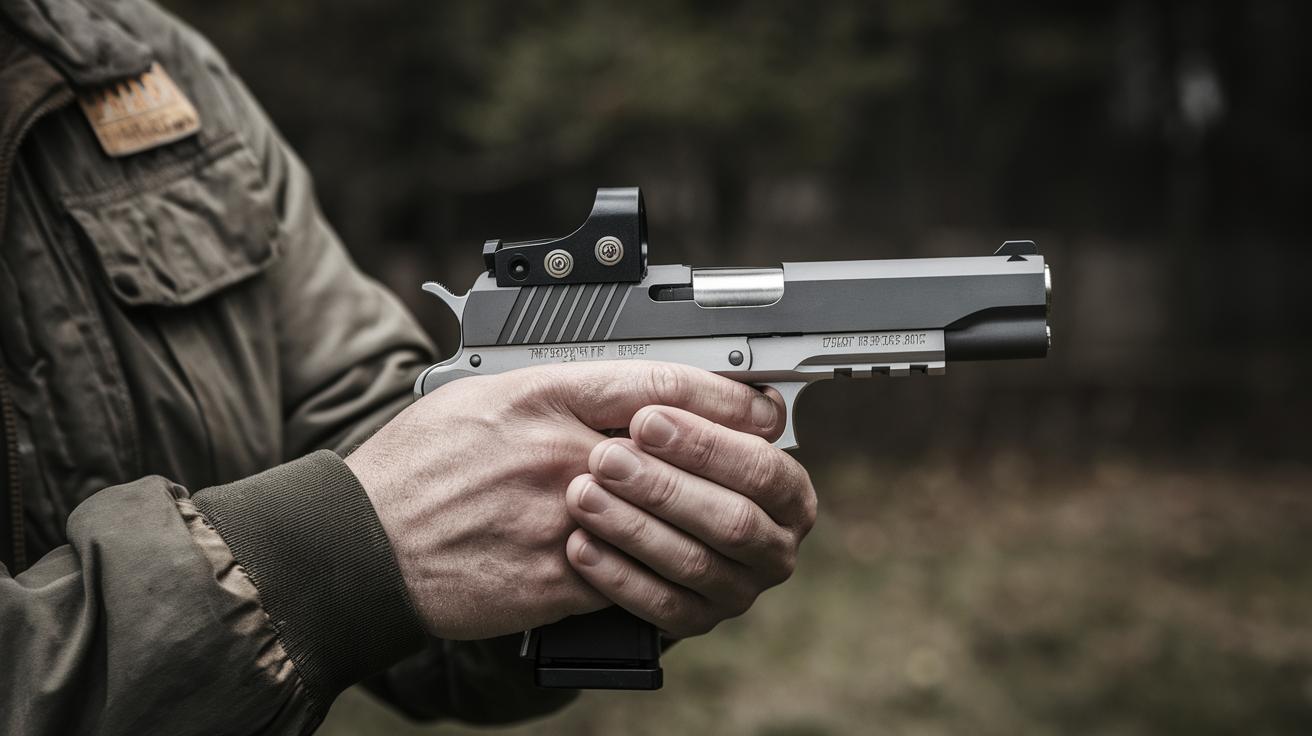
Understanding How a Pistol Works
Pistols are compact firearms that have intrigued enthusiasts and professionals alike, thanks to their unique mechanisms and historical significance. This blog post delves into the intricacies of how pistols function, breaking down the trigger mechanism, and distinguishing between semi-automatic pistols and revolvers. Each section aims to illuminate the underlying mechanics and operational principles of pistols. Whether you’re a firearms novice or simply curious, this comprehensive exploration provides valuable insights into one of the most ubiquitous types of handguns.
Trigger Mechanism
The trigger mechanism is the heart of a pistol’s operation, initiating the sequence that ultimately discharges a bullet. At its core, the trigger is a lever actuated by the user’s finger. When the trigger is pulled, it engages with other components within the pistol — often a sear and a hammer in traditional designs. The energy release causes the firing pin to strike the primer of a cartridge, igniting the gunpowder and propelling the bullet forward.
While the concept is simple, the precision of the trigger mechanism is critical for accuracy and safety. Modern pistols often incorporate additional safeties to prevent accidental discharge, including trigger safeties, hammer blocks, and firing pin blocks. The smoothness of a trigger pull, measured in trigger weight, plays a significant role in shooting performance, influencing both accuracy and user experience. Adjustments and enhancements to the trigger mechanism can significantly alter a pistol’s operation and efficacy.
Semi-automatic Pistols
Semi-automatic pistols are renowned for their ability to automatically cycle a new round into the chamber with each trigger pull, allowing for rapid successive shots. This is achieved through a process known as recoil operation or blowback operation. Upon firing, the energy from the discharged cartridge is used to eject the spent casing, re-cock the hammer or striker, and chamber a new round from the magazine.
These pistols generally feature a removable magazine that holds multiple cartridges. The design emphasizes speed and efficiency, making semi-automatic pistols popular in both civilian and law enforcement contexts. The slide mechanism is central to a semi-automatic pistol’s operation, moving backward under recoil, extracting and ejecting the spent casing, and then moving forward to feed a new round. This complex ballet of engineering allows shooters to engage multiple targets quickly and with minimal effort.
Revolvers
Revolvers distinguish themselves from semi-automatic pistols with their distinct rotating cylinder that holds multiple rounds. Each time the trigger is pulled, the cylinder rotates to align the next chamber with the barrel, allowing for rapid firing without the need for magazines. This mechanical action is often perceived as simpler and more reliable due to its fewer moving parts and robust construction.
The double-action revolver offers enhanced functionality, as pulling the trigger both cocks and releases the hammer. This capability allows for quicker firing sequences compared to single-action models, where the hammer must be manually cocked for each shot. Revolvers are celebrated for their durability and ease of use, making them a favored choice for self-defense and hunting.
Related HowStuffWorks Links
For those interested in delving deeper into how pistols and other firearms work, there are numerous resources available that explore the science and artistry behind these weapons. Websites like HowStuffWorks provide a wealth of articles detailing the physics, history, and development of firearms technology, offering a comprehensive look at the complexities behind the trigger.
From understanding the nuances of different ammunition types to exploring the historical evolution of firearms, these resources encourage readers to develop a well-rounded understanding of the subject. Engaging with this content can enhance both appreciation and critical insight into the world of firearms technology.
Final Thoughts
| Section | Content Summary |
|---|---|
| Trigger Mechanism | Discusses the critical role of the trigger in initiating the firing process, emphasizing the importance of safety and precision. |
| Semi-automatic Pistols | Explores the mechanics of semi-automatic pistols, focusing on the recoil operation and efficient firing capabilities. |
| Revolvers | Highlights the unique rotating cylinder mechanism of revolvers and compares single-action and double-action models. |
| Related HowStuffWorks Links | Encourages exploration of additional resources to gain a deeper understanding of pistol technology and history. |