
Mastering the Proper Way to Hold a Gun: A Guide to Safety and Accuracy
In the world of firearms, safety and accuracy are paramount. Properly holding a gun is not just about comfort but about ensuring your safety and the safety of those around you. This comprehensive guide explores the fundamentals of gripping a handgun, emphasizing the importance of using a two-handed grip, finding the right grip strength, and mastering trigger control. By understanding and practicing these essential principles, you’ll improve your shooting accuracy and confidence. From aligning your hands correctly to managing your breathing, we’ll cover every aspect of holding a handgun for better performance and safety in any shooting scenario.
Use Two-handed Grip
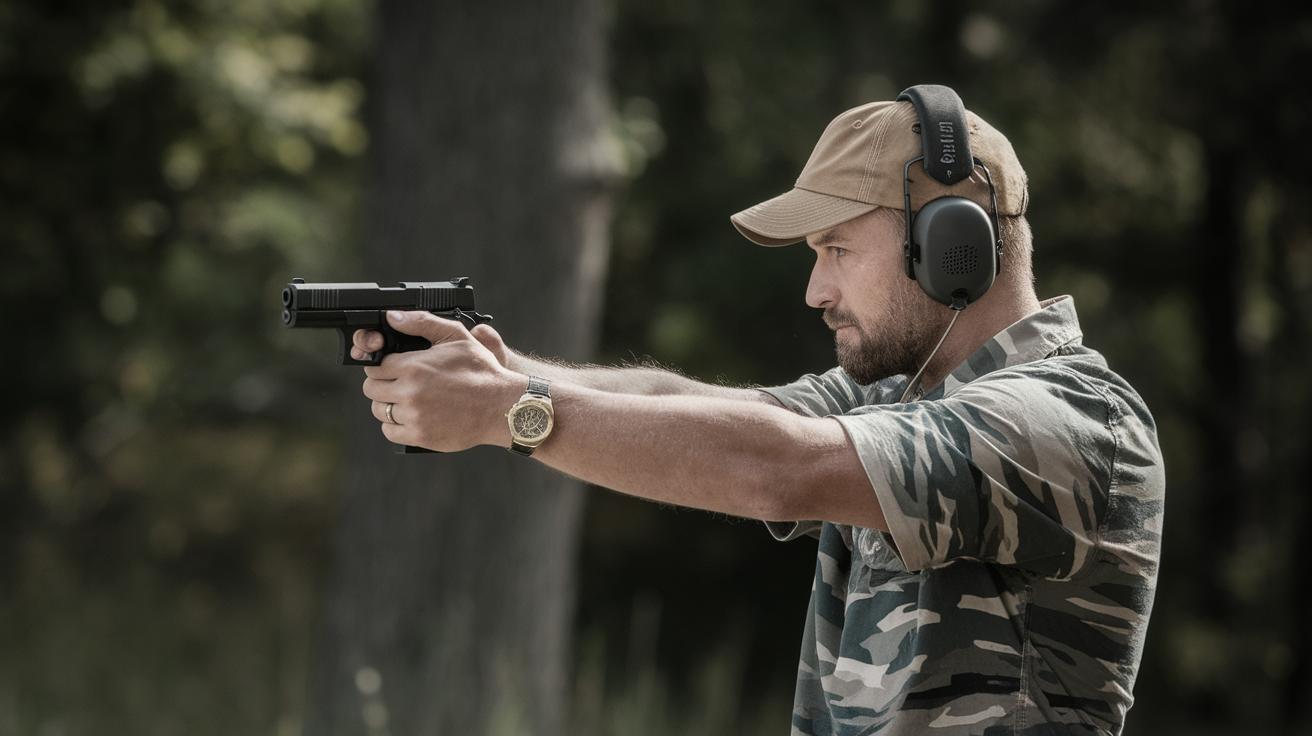
A two-handed grip offers the most stability and control when handling a handgun. This grip method maximizes your ability to manage recoil and aim accurately. To maintain a two-handed grip, ensure both hands work together to stabilize the firearm. Typically, your dominant hand grips the handle while your support hand wraps around it, providing additional stabilization.
The two-handed grip is often called the “isometric tension” method, where the push and pull between both hands create a stable platform. The support hand’s palm should cover any exposed area of the grip, with fingers wrapping around those of the dominant hand. With practice, this technique provides much-needed confidence in handling and firing a handgun effectively.
Find the Right Grip Strength
Grip strength significantly impacts your shooting effectiveness. A too-loose grip can result in unstable aim and hinder your ability to control the gun’s recoil. On the other hand, an excessively tight grip can cause fatigue and decrease flexibility, impacting accuracy over time.
Finding the perfect balance involves gripping firmly enough to control recoil but not so tight as to cause tension in your hands and arms. A practical way to test this is to ensure that your grip doesn’t lead to shaking or muscle fatigue within a short period of shooting. Regular practice and minor adjustments will help in finding the sweet spot for grip strength.
Place One Hand Under the Other
Correct hand placement is crucial for maximizing the effectiveness of a two-handed grip. The dominant hand grasps the gun handle firmly but comfortably, with the index finger resting on the trigger guard until aiming to shoot. The support hand comes in to reinforce stability by cupping the dominant hand.
By placing the support hand under the dominant hand, the shooter benefits from increased control over the weapon’s movement, particularly during recoil. It’s important to ensure that both thumbs face forward and align with each other, creating a tight and consistent grip, which promotes shooting accuracy and aids in faster target reacquisition.
Use Opposite Forces
Employing opposite forces between your hands enhances stability and control when shooting. This dynamic tension involves the dominant hand pushing forward while the support hand pulls back slightly. The tension helps lock the gun in place and counteracts the motion generated during recoil.
This technique creates a counterbalancing effect, allowing the shooter to maintain a firm but fluid position, enabling consistent shots. Practicing this method with each shooting session aids in establishing muscle memory, translating to tighter groupings and improved overall marksmanship.
Top of the Barrel Up, Bottom of the Handle Down
The proper positioning of a gun in your hands involves ensuring that the top of the barrel slightly tilts up while the bottom of the handle points downward. This natural angle facilitates easier alignment with your line of sight and enhances target acquisition.
Maintaining this positioning counteracts the rise that occurs when a shot is fired, enabling quick leveling for follow-up shots. Practitioners of this technique find it easier to transition between targets and maintain consistent performance, especially in rapid-fire scenarios.
Control Your Breathing
Controlling your breathing is a crucial aspect of maintaining accuracy while shooting. Your breath can introduce slight but significant movements affecting your aim. By incorporating breathing control techniques, you can minimize these disruptions.
Breathing deeply before taking a shot and exhaling slowly while gently squeezing the trigger can lead to smoother and more precise shots. Consistent practice in controlling your breath helps synchronize your body and firearm, resulting in enhanced shooting performance.
Pull the Trigger Slowly
Trigger control is an often overlooked yet vital component of shooting accuracy. A common mistake of novice shooters is jerking the trigger, leading to disruption in alignment and inaccurate shots. The key is to apply gradual, steady pressure on the trigger.
A smooth trigger pull requires practice and mindfulness. By focusing on pulling the trigger slowly and consistently, shooters can reduce the chances of flinching or pulling shots off target. This technique, combined with breathing control, lays the foundation for superior accuracy and control.
Final Thoughts on How to Hold a Handgun
Mastering how to hold a handgun is a fundamental skill that significantly impacts shooting capability and safety. Proper grip techniques, hand placements, and disciplined trigger control come together to form a solid foundation for any marksman. As you hone these skills through practice and repetition, you’ll find marked improvements in both accuracy and confidence.
The journey of becoming proficient in handling firearms is one of continuous learning and adaptation. By dedicating time to refining these techniques, shooters can ensure they handle their weapons with the respect, safety, and precision required in any scenario, whether it be sport shooting, personal defense, or professional use.
| Technique | Benefit |
|---|---|
| Two-handed Grip | Provides stability and control |
| Grip Strength | Balances control and fatigue |
| Hand Placement | Maximizes stability |
| Opposite Forces | Enhances shot consistency |
| Barrel Positioning | Improves target acquisition |
| Breathing Control | Reduces aim disruption |
| Slow Trigger Pull | Increases accuracy |

1 comment
Alex:
Great tips! Controlling my breathing has really improved my accuracy.
Leave a comment